
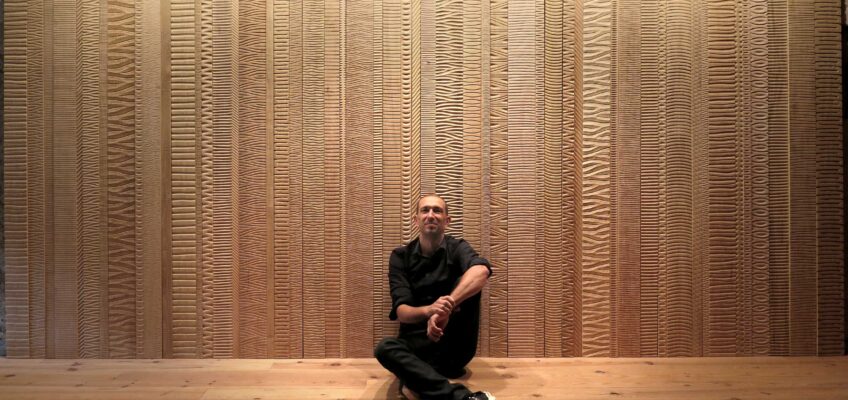
Benoit Averly is a French sculptor, who lives and works in Burgundy. He is using wood to create distinctive shapes, ”giving space to the interiors that welcome them”, as he says. Benoit Averly is inspired by nature and architecture, searching for balance with different textures, shapes and patterns. He’s transforming pieces of wood into elements with different silhouettes, structure and properties.
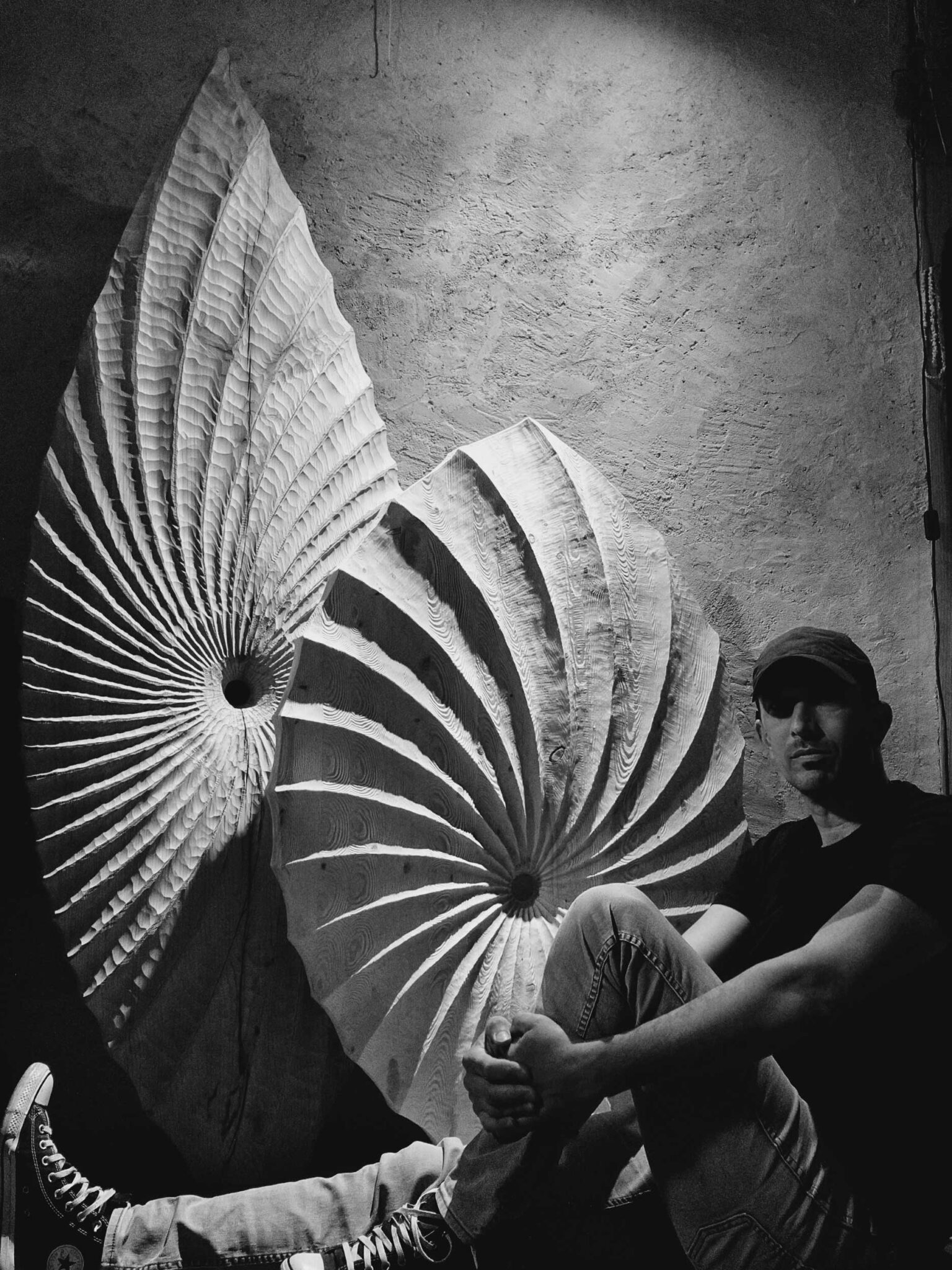
1. Who is the French artist-sculptor Benoit Averly?
I was born in 1980 and grew up on a farm in Burgundy, a region in the east of France, close to Switzerland.
2. Can you tell us how you choose the materials to express yourself?
My sculptures are made of wood, this is the only medium I work with. Wood came very early in my life, it was all around and very often used to build and fix things. I also live near a forest and I could see how trees grow, what they look like. Later on working with wood I realized that what is found inside a tree is just a picture of its life. The grain inside the material tells the entire story of the plant. I choose my wood either in sawmills, when I need specific pieces for particular projects or when people offer me fallen trees or trees that have been cut for safety reasons. Sometimes I work in collaboration with other artists who bring their own material, textile, feather, paint, lacquer…
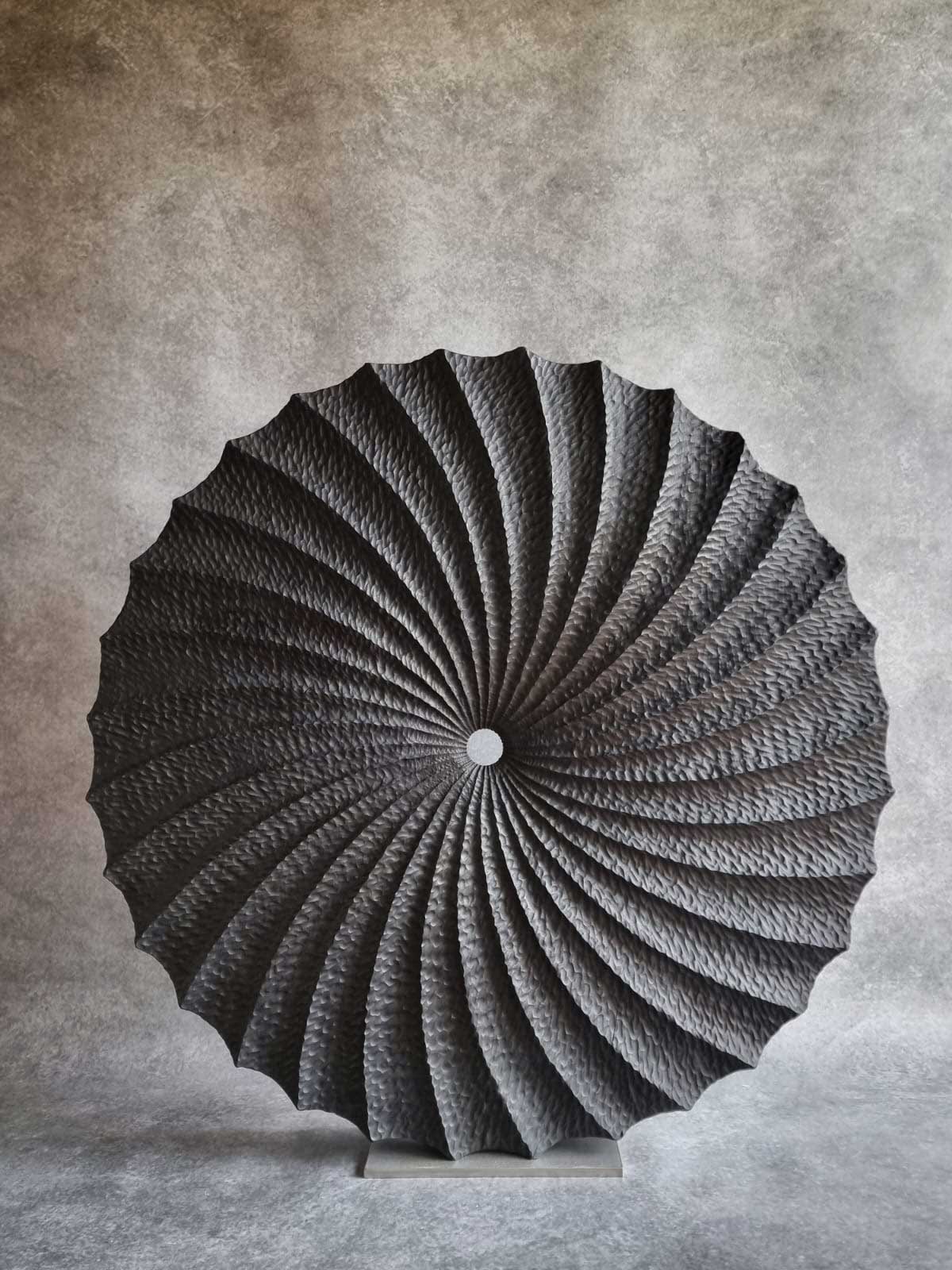
3. You have an unique style and you process materials in a certain way that characterizes you. How do you find your models, do you have a specific pattern?
My work is directly inspired by what I like to look at. I have always been drawn to textures and patterns. For over 20 years I have taken photos of textures that I would find pretty much everywhere, mostly during numerous trips abroad, but also close to home, in nature or cities. Rhythm is an important part of my work, a good rhythm will induce a consistent texture or pattern. With rhythm the work will be repetitive but not too mechanical. I like repetition and simple shapes and patterns.
Shapes evolve with time – starting with simple shapes that we can get by using a wood lathe. I am a woodturner by trade and for a few years my production was salad bowls and boxes. I then started to create more sculptural shapes like rings and all the sculptures that came after, started with that. One shape brings another and it moves on like this.
Also sketching is a big part of my creative process. It helps me visualize shapes without having to make them with wood. I like to sketch on small pieces of paper. I am not wasting any material; this way I can be totally free to sketch whatever I want without even looking for something in particular, just playing with my pencil with no stake.
4. How can you describe your creations?
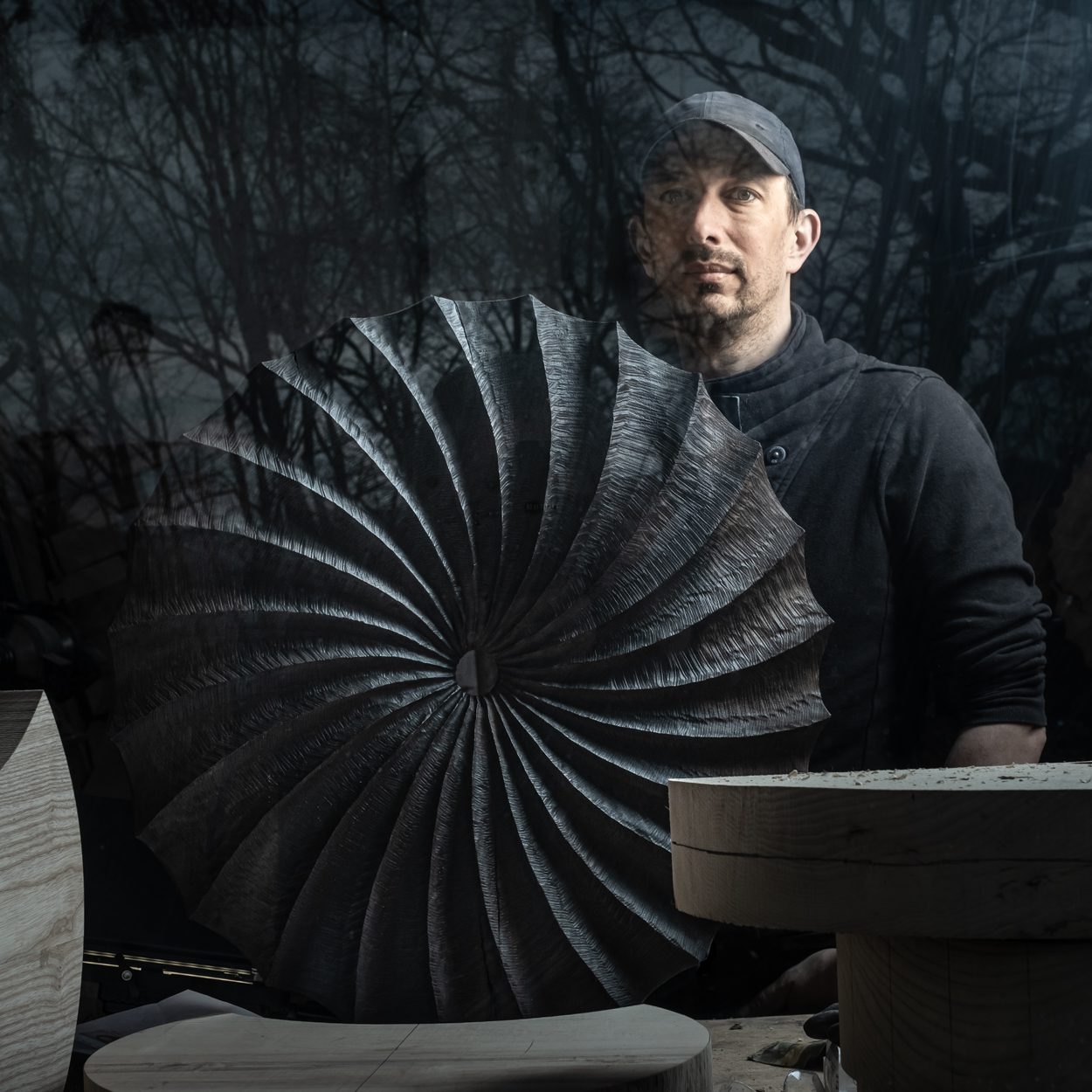
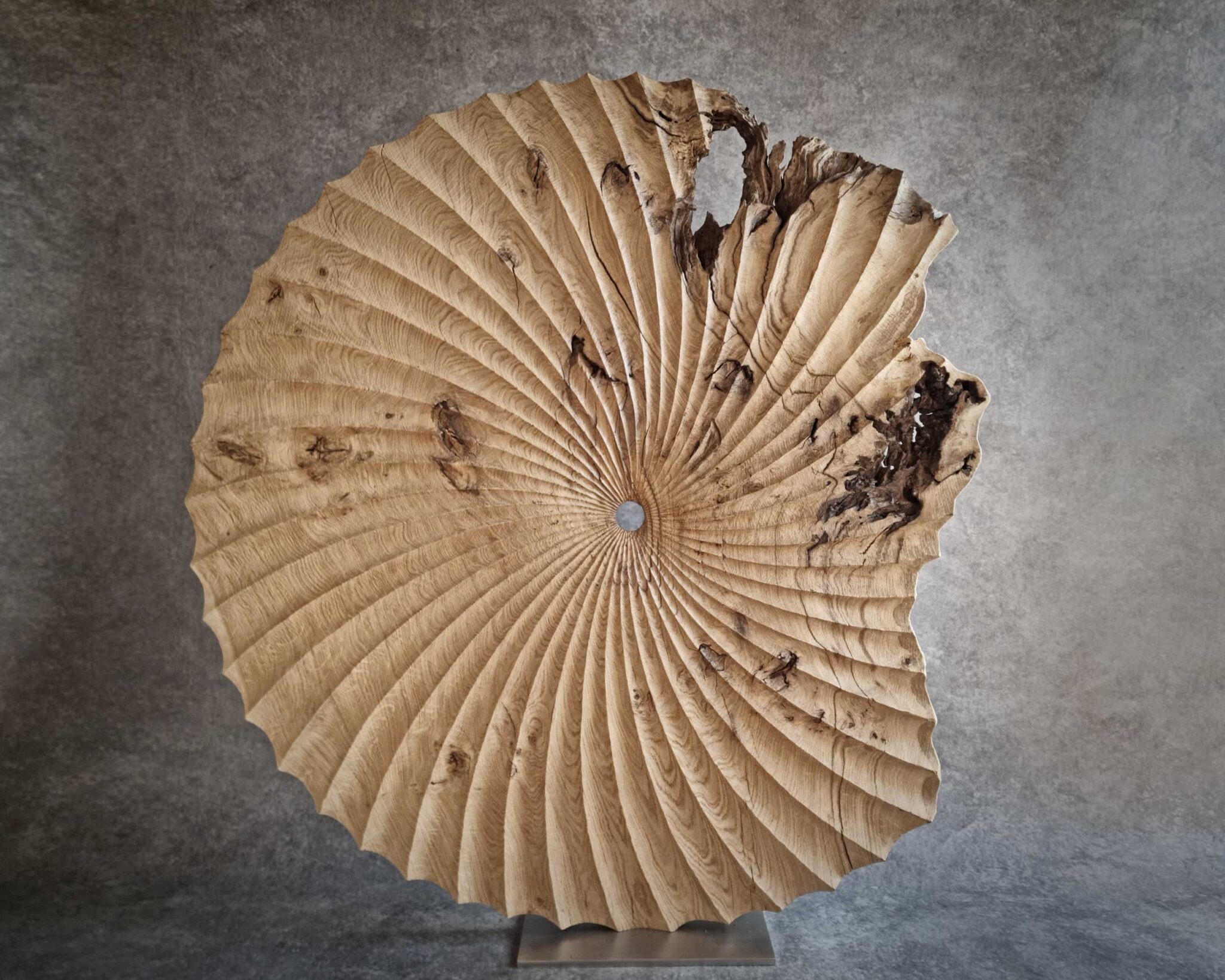
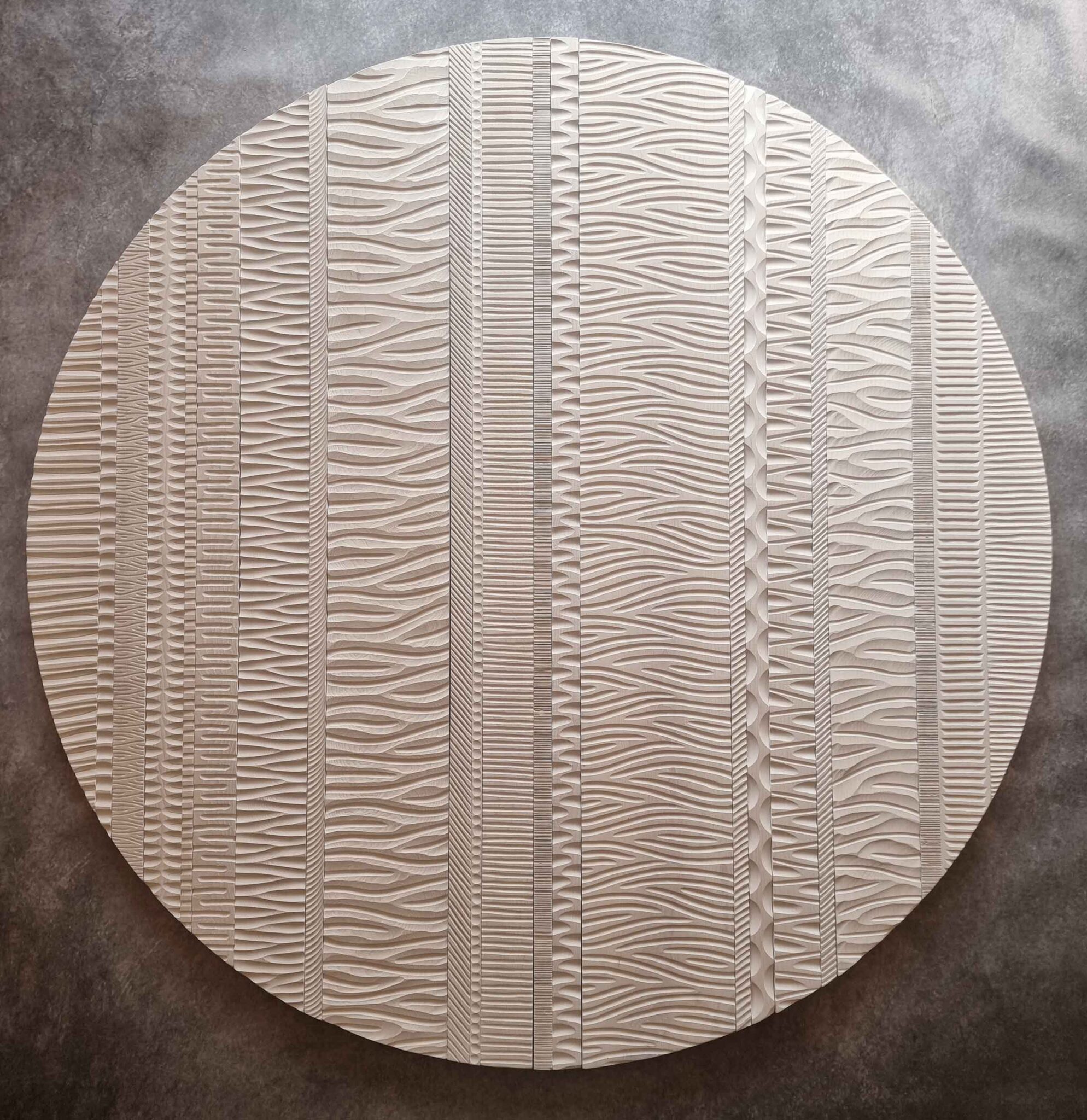
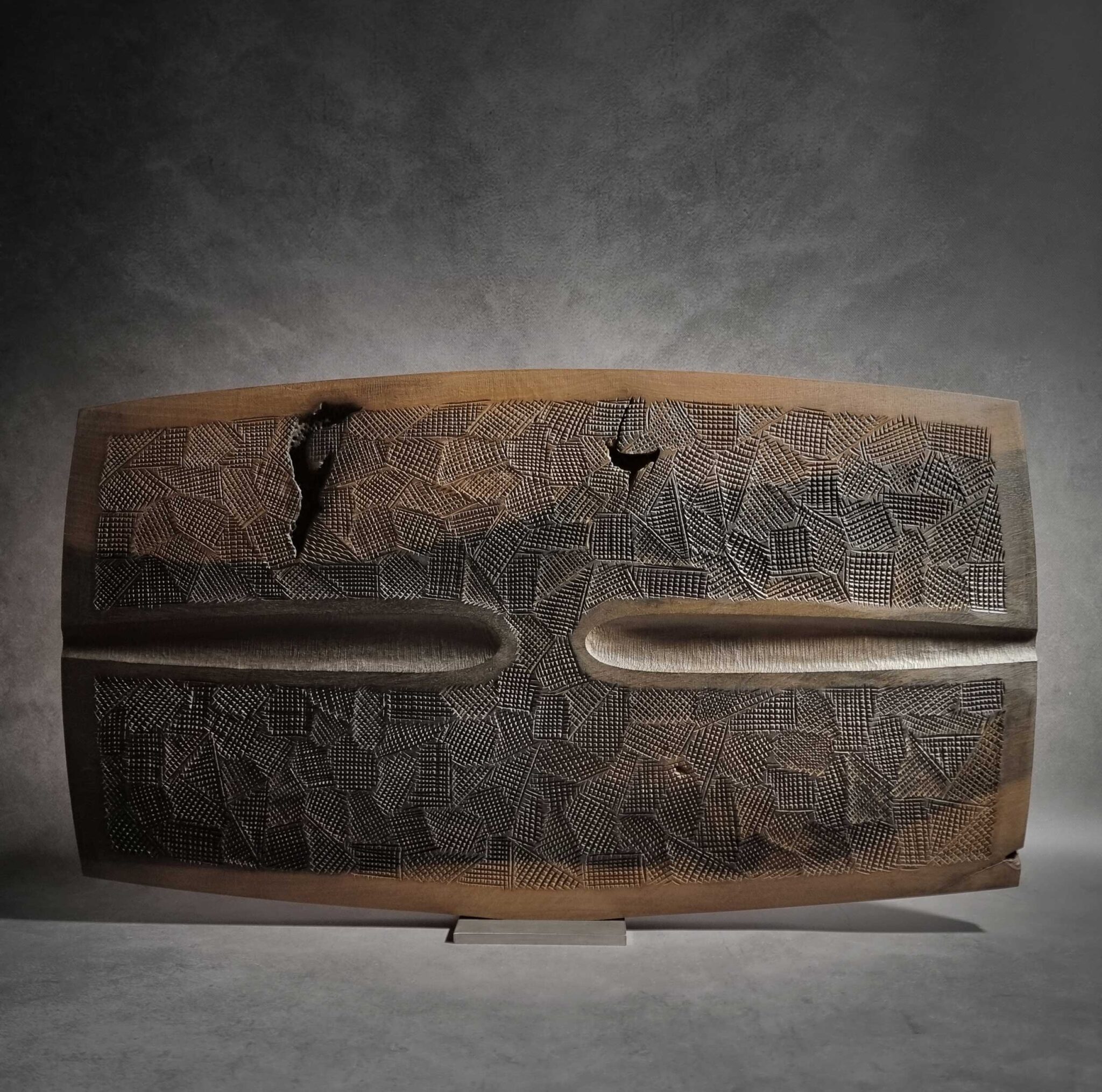
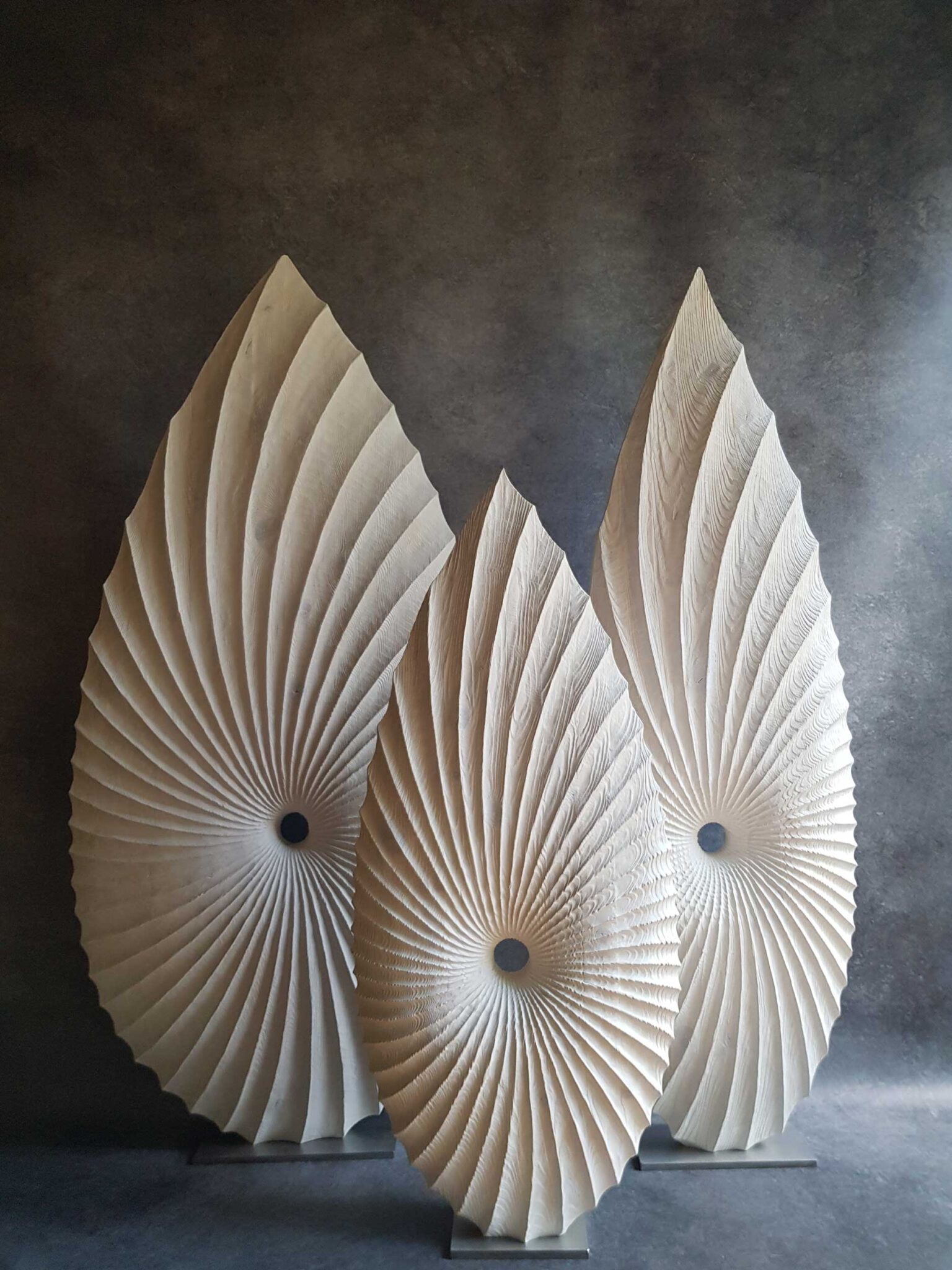
My creations are abstract sculptures and wall panels. The shapes are simple, often quite geometrical but with an organic feel. The surface of the wood is often finely worked once the overall shape has been made. Texture is what characterize my work.
I also like to use wood as I find it. That means that I keep whatever I find, knots, any distressed wood that are all part of the material. They are testimonies of the life of the tree. I like to see my work as quiet and giving space to the environment they are in, instead of taking up some space. I try to make them look balanced, peaceful, like objects that could have been found. Their size vary from 30/40 cm to several meters. The tallest sculptures I have make at the moment are 250 cm tall and the wall panels can reach 6 to 8 m wide.
5. Why did you choose to sculpt for interior design and art galleries?
I didn’t choose to sculpt for any specific fields or client. It just turns out that the people who are the most interested in buying my work are interior designers, for their projects.
This is a good market for me as they work on large projects in which there is space for nice pieces.
6. Do you think artists should have a mentor/guide? Do you have artists that you follow, who are worthy of following or are a source of inspiration for you?
I don’t think having a mentor is necessary, what seems important to me however is to be open and curious and to be aware that it is possible to develop a creative practice and make a living with it. Of course a mentor can help with sharing their experiences.
Here are some people who inspire me: Vincent Munier, French photographer, Francis Hallé, Botanist, Quentin Garel, sculptor, George Rousse.
7. What can you tell us about the projects you are currently working on or preparing for?
The main project at the moment is building a new studio. With my work becoming larger and larger my studio has become too small and I struggle fitting everything in it.
Other than that I am currently working on several pieces that I have on commission for interior designers. Some are large wall pieces for hotels, some are sculptures for cruise ships. I am also preparing pieces for a show in Lille, next march with Galerie Sylvie Platini, and possibly another on in NYC with my agent in the USA. So I keep myself busy as you can see!
I have a lot of wood waiting for me and I have planned some time in the studio at the end of the year to get some new ideas out.
8. What advice would you offer to someone who would like to start their activity in the artistic/creative field?
The main thing I would recommend to someone who wants to start an activity in the artistic field would be to make art, focusing on what brings them the most joy when they do it. Trying to bring out what is deep inside, without trying to achieve anything in particular. Will it be good or bad? This should be sorted in a second phase. I think this is the only way an artwork can be genuine.
Do not try to find a particular style, the style will come out by itself with time and this is what others will eventually refer to when they talk about the work. Also I would recommend to try to stay independent as much as possible and build a client base of their own in order to not be stuck with, or belong to someone (agents, galleries, etc.).
The representative portrait of Benoit Averly with the black wheel is copyright in situ by Sylvain Pascal.
The Instagram handle of the artist is @benoitaverly_sculptor and his personal site is www.benoitaverly.com

