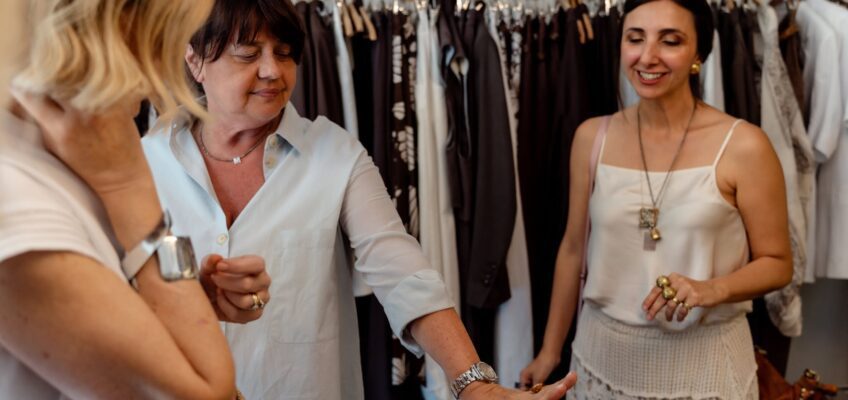
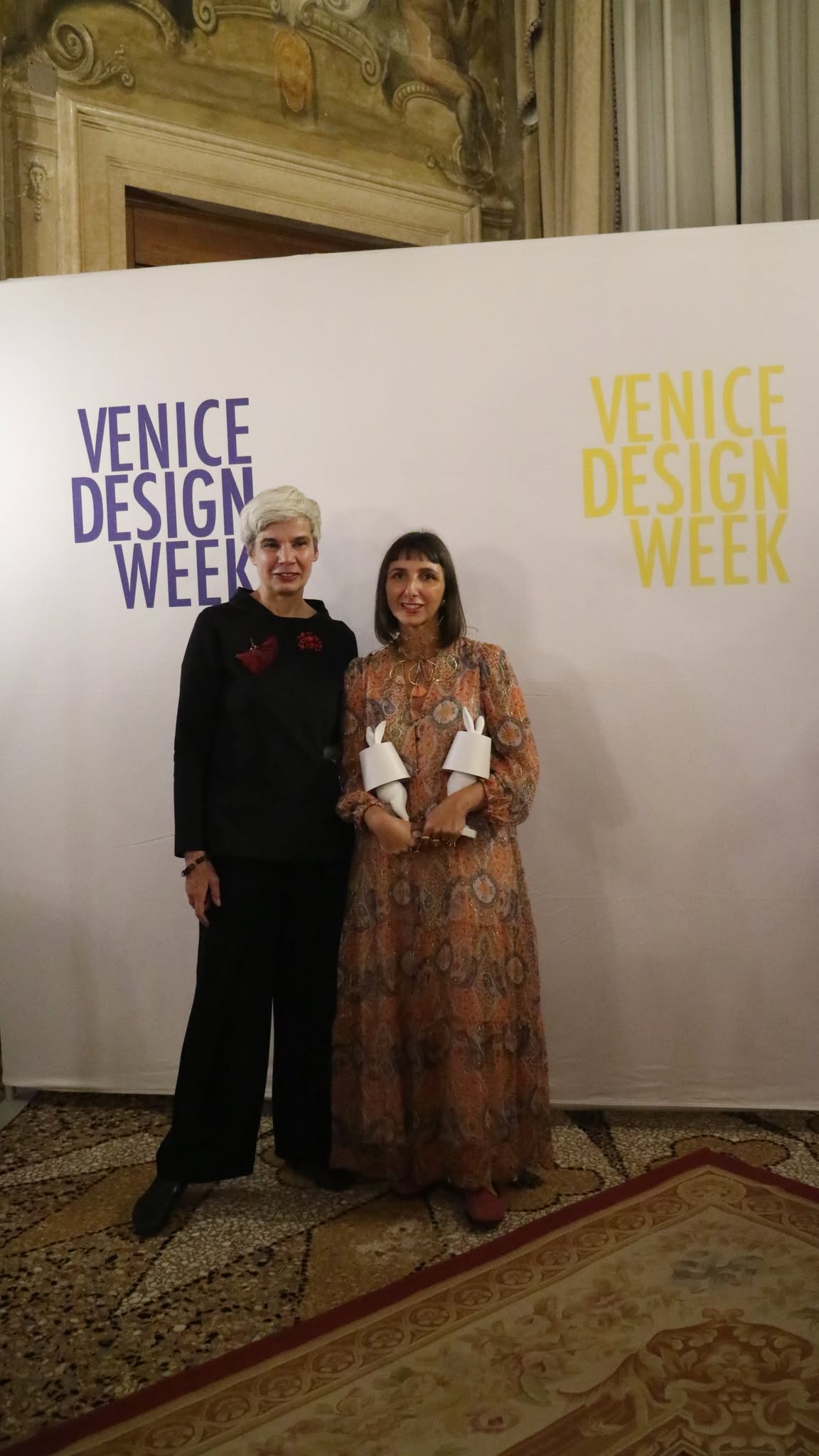
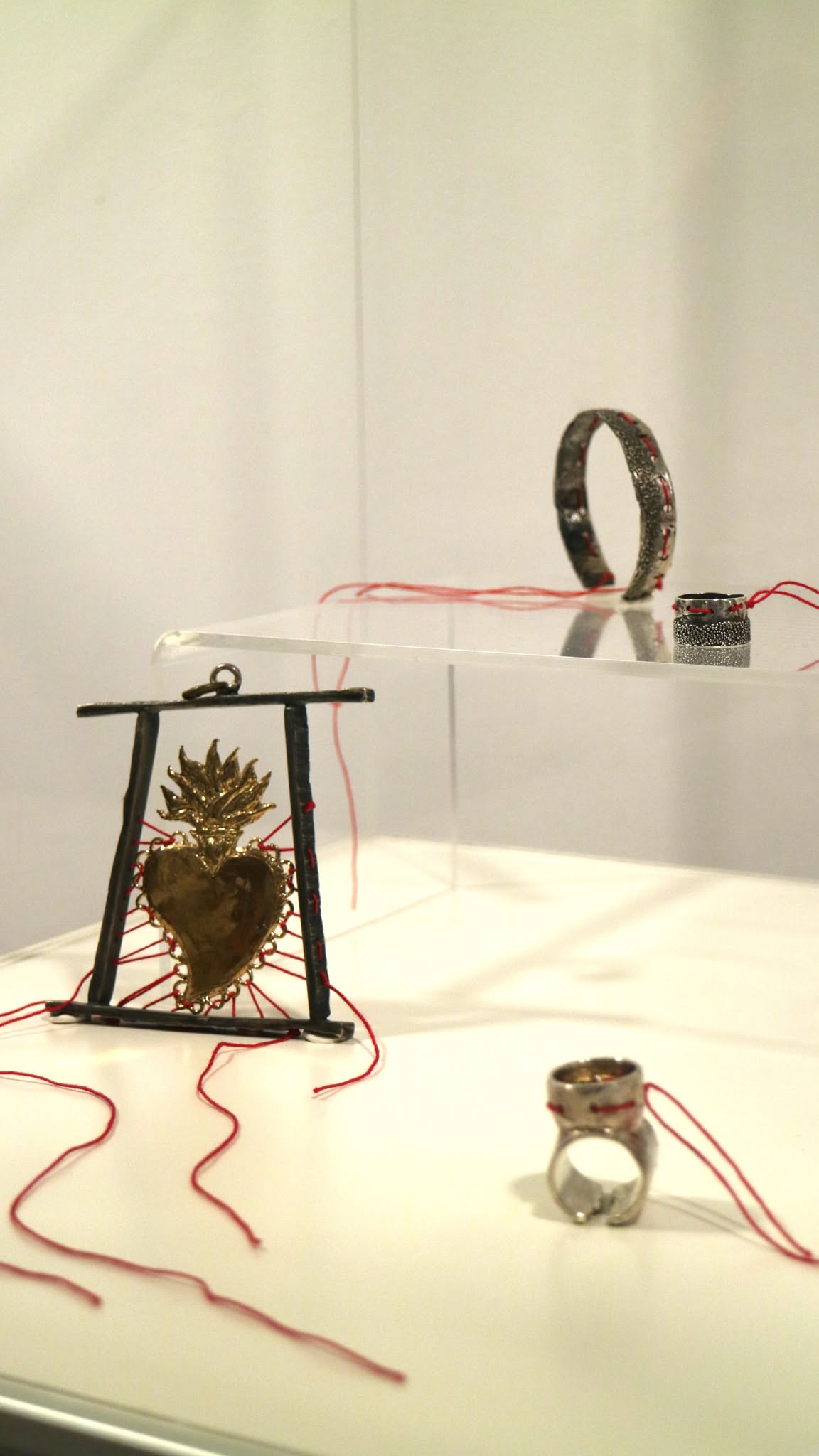
Laura Di Leo, the founder of the Elledi Gioielli brand, was honored with the Atelierul Award – The Iconic Ones, during the exhibition „I Don’t Shine, I Have Something to Say” at Venice Design Week 2025. I was captivated by her unique style, especially how she skillfully integrated red fabric into her sophisticated jewelry designs. The use of vibrant red added a striking touch to her elegant pieces.
Since this is her first time being interviewed, I am delighted also, to have her as a guest in Atelierul Magazine.
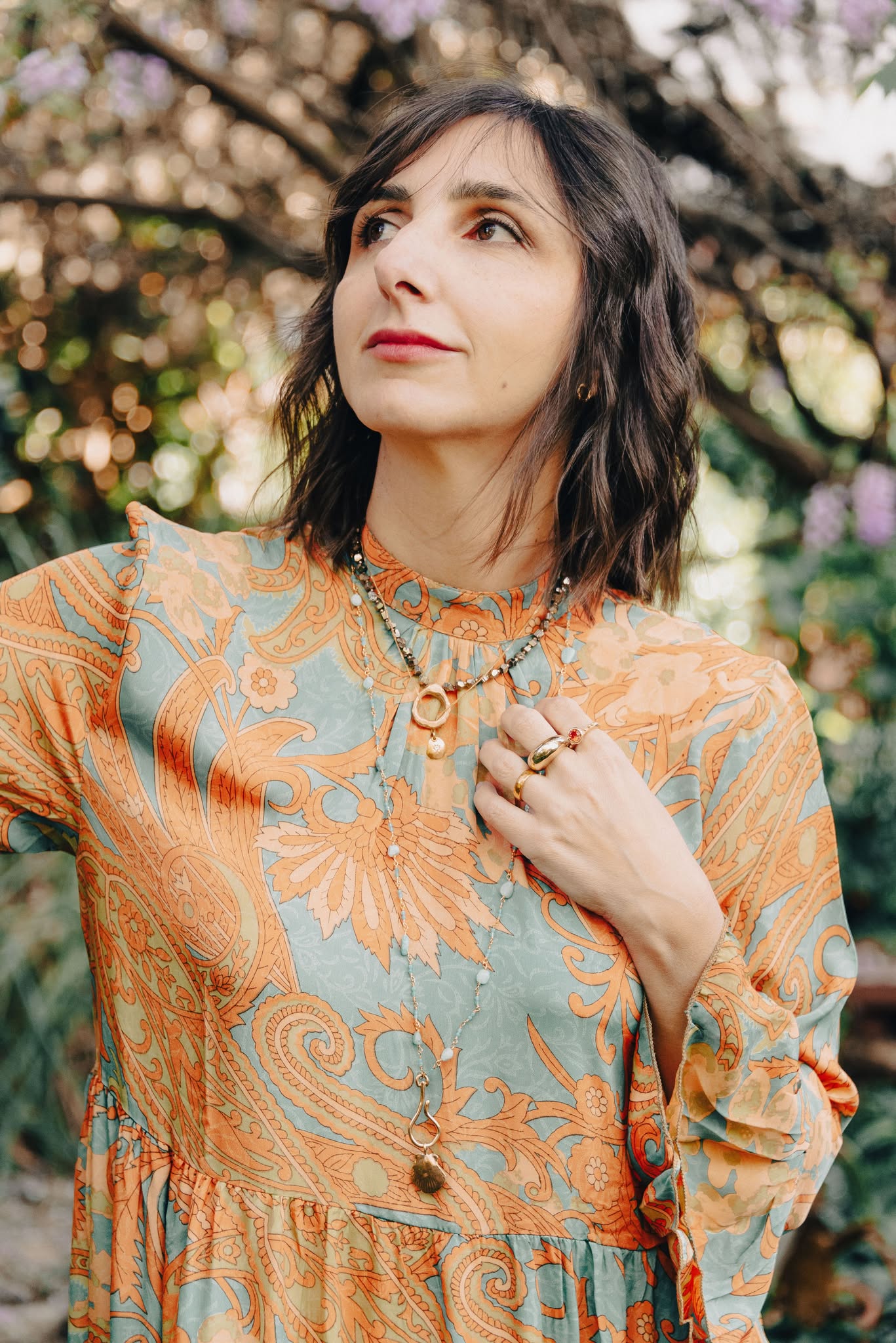
1. How was the process or better said the adventure from being a lawyer to becoming a jewelry maker? What made you change your profession?
It has truly been a journey, a slow and profound return to myself. For many years I followed a “classic” path: high school, university, the bar exam. I worked as a lawyer and later in the legal department of a large company. It was a solid, respected road, yet over time I began to feel that something within me was struggling to find space. I was missing air, the freedom to express myself.
When I was expecting my daughter, that feeling became stronger. Motherhood was a threshold, a moment of truth. I felt the need to look inward and ask who I really was, beyond roles, titles, and expectations. I had built a great deal, yet the most essential part was missing: myself.
The change didn’t happen overnight. It was a slow, sometimes painful process, filled with questions, fears, and uncertainty. But one day I picked up wax again (I had already attended an amateur lost-wax course) together with fire and tools, and something ignited. The material began to speak to me. My hands took the place of words, and I understood that this was my language. From there, a new phase began. I chose to study wax modelling in Scuola Orafa Ambrosiana in Milan, to learn the discipline of craft and the patience of gesture. Then I felt the need to move beyond technique and explore the meaning of jewelry as an artistic form and a contemporary language. So I enrolled in the Contemporary Jewelry course at IED Rome, where art history and conceptual research intertwined with my personal journey.
Today, every time I create, I feel that I bring together the two sides of myself: the rational mind, shaped by logic and argument, and the intuitive, emotional self that has finally found its voice.
Jewelry has become, for me, a space of freedom and truth, a place where matter finds its own language. Through metal, wax, and light, I tell the story of my journey from order to poetry, but also of how I perceive and interpret the world around me. For me, jewelry is not a simple ornament but a form of thought that reflects on our time, on relationships, on the delicate balance between fragility and strength. It is a medium through which I can express my perspective on the world, create connections, and evoke questions. It is my way of engaging with contemporaneity, transforming emotions and reflections into tangible form, into sign.
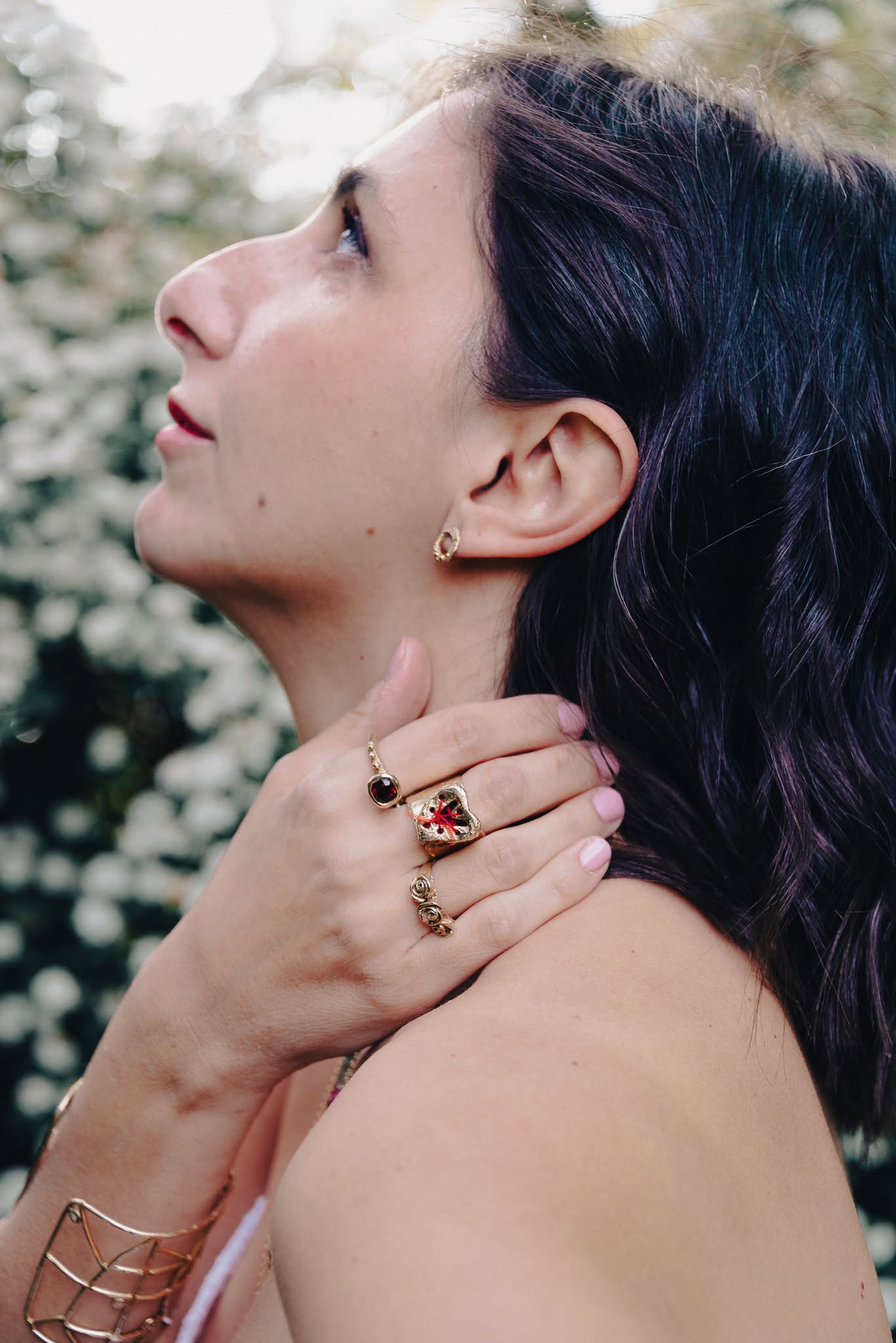
2. In your posts on Instagram, your statement was that: “We are stitches of shadow and light, of fragility and strength, of time and space. Connected, by the same primary thread of community and freedom” and you use a red textile wire in your jewelry. How did you get to this statement? Why a red wire (filo rosso)?
The red cotton thread is not an ornamental detail; it is a gesture of repair, of resistance and active memory.
It stitches, heals, and connects. It pierces the metal, traverses it, and transforms it.
Within this dialogue between gesture and matter, between thread and metal, a new form of sacredness emerges, not religious, but human, corporeal, emotional, and profoundly collective.
Each piece becomes a poetic and political act, an invitation to cross darkness with courage, to mend the rift between soul and body, between the individual and the community.
Red, as a primary color, embodies essence and essentiality. It is also the color of blood, a reminder that sewing can be seen as suturing, as a process of reconnection and healing of what has been divided or broken. Blood becomes the visible trace of what once was, the sign of a passage from fragmentation to wholeness.
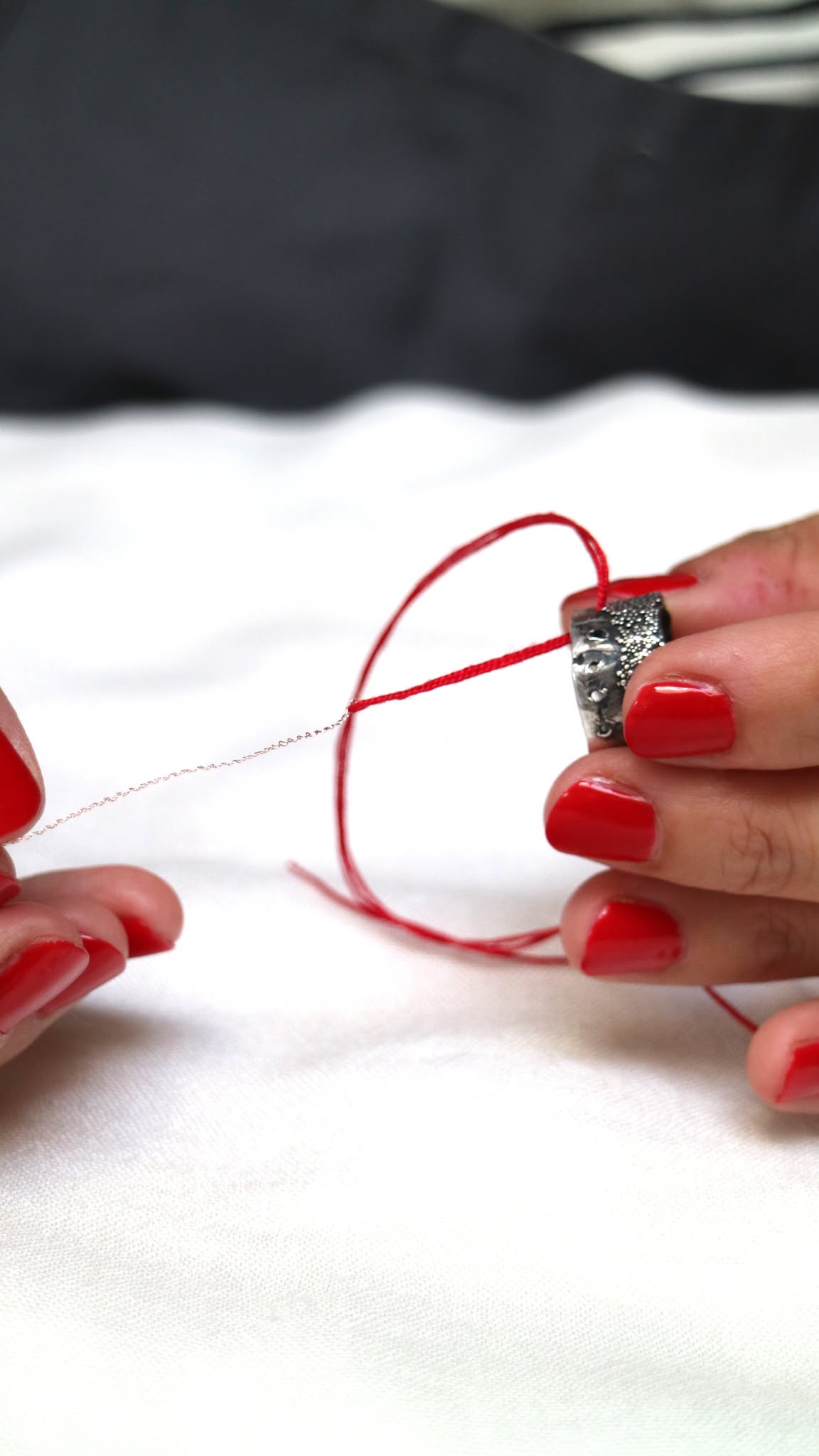
The use of fragile materials is essential. It is through fragility, through the conscious exposure of vulnerability, that self-awareness arises. Recognizing what we are, our wounds and our delicacy, is what allows us to grow stronger. This is why I work with such materials: fragility is not weakness, but a profound form of strength.
3. Do you wear your own creations? How does the audience interact with your jewelry?
Yes, I do. I see my creations as an extension of myself, a visible projection of my inner world, of my way of perceiving and inhabiting reality. Every piece I wear becomes part of my language, a sign that speaks where words fall short.
When people encounter my jewelry, there is often a moment of silence, of genuine curiosity. They come closer, they ask questions, they want to understand what lies behind the form, the gesture, the material. The encounter becomes a dialogue, not just an exchange of words, but of sensitivities.
I tend to connect with those who already have an affinity with art, with those who perceive the object not merely as decoration but as an emotional and symbolic experience. My pieces are not meant only to be seen, but to be felt.
4. When do you know when a jewelry piece is finally complete?
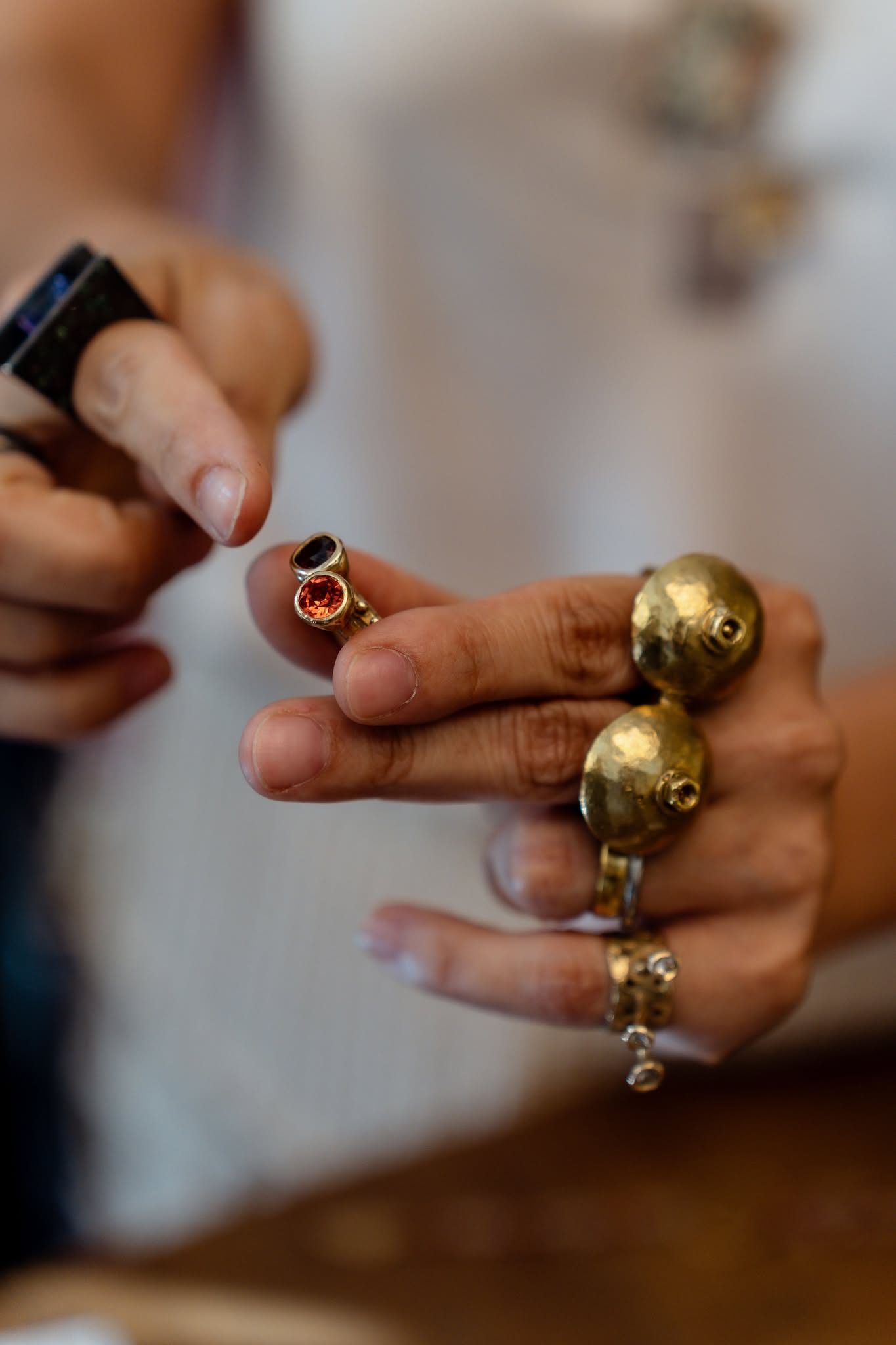
My creative process always begins with an intuition, a deep thought. From there, an image takes shape in my mind, sometimes i dream it, other times it appears clearly, as if asking to be brought to life. Then follows the dialogue with the material: i draw, observe proportions, balance voids and solids, light and shadow, and harmony. It is a process of continuous listening, almost meditative.
I know a piece of jewelry is complete when, looking at it, it conveys everything it was meant to express. When it speaks on its own, without needing anything added or removed. In that moment, I feel it has found its voice and can begin its journey into the world.
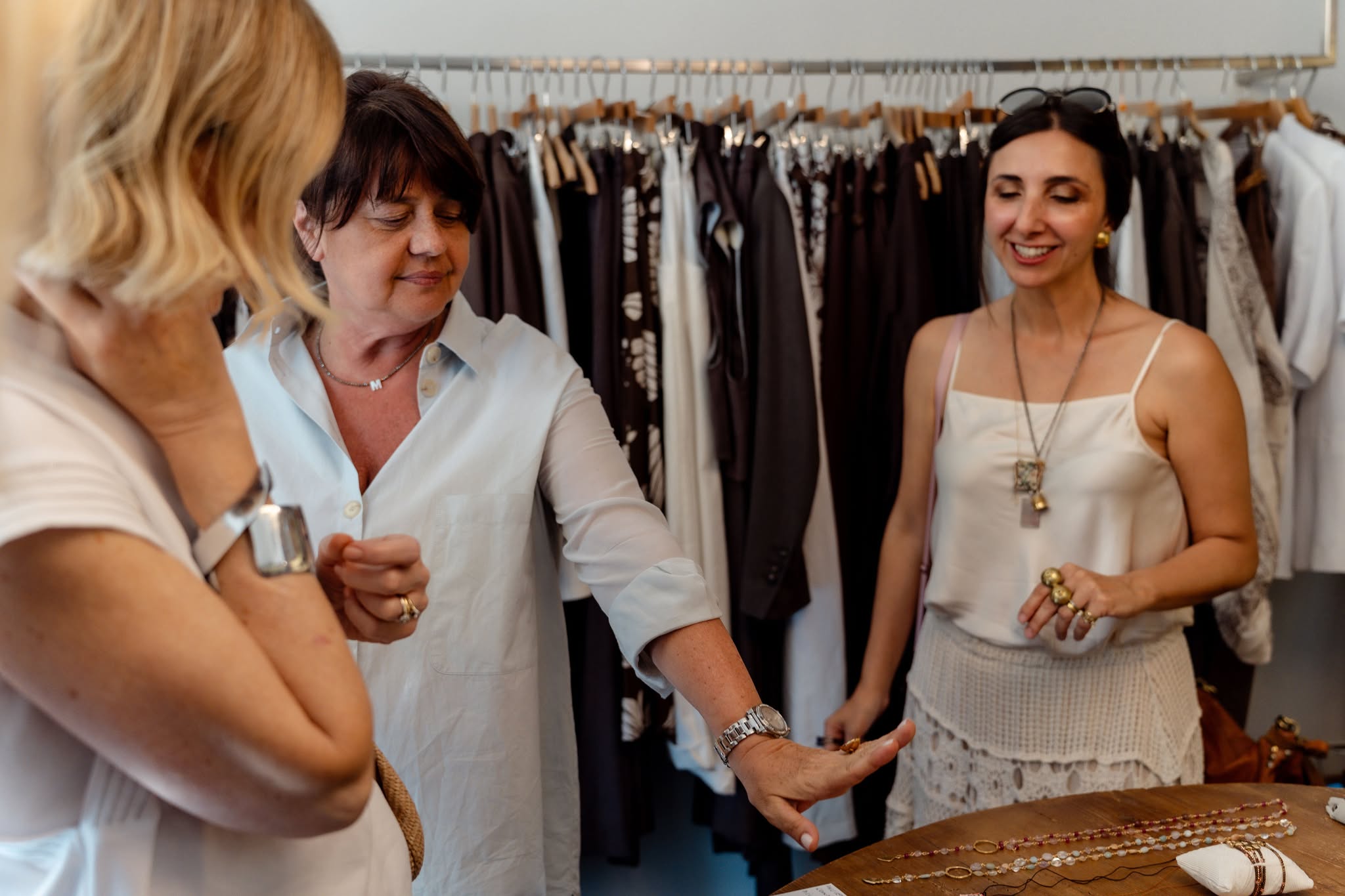
5. Congratulations on winning our prize Atelierul Award – The Iconic Ones, during the international exhibition “I Don’t Shine, I Have Something to Say”. What are your creations saying to the public, from your point of view? And how do you shine as a jewelry designer?
Thank you so much, Atelierul Magazine! I am deeply grateful and honored to receive this recognition; it is a true source of pride.
Through my creations, I communicate the delicacy of inner exploration, the connections between materials, and reflections on themes that touch us as individuals, as women, and as human beings. I explore the relationship between the human and the divine, between spirit and body, between light and matter. I strive to make ideas, emotions, and thoughts wearable; to create connections between past and present, breaking down the temporal barriers that separate space and time. I wish to express my sincere gratitude to Eleonora Varotto, curator of “I Don’t Shine, I Have Something to Say,” for recognizing and embracing my artistic voice, and for granting me the precious opportunity to present my work in Venice during the Venice Design Week 2025.
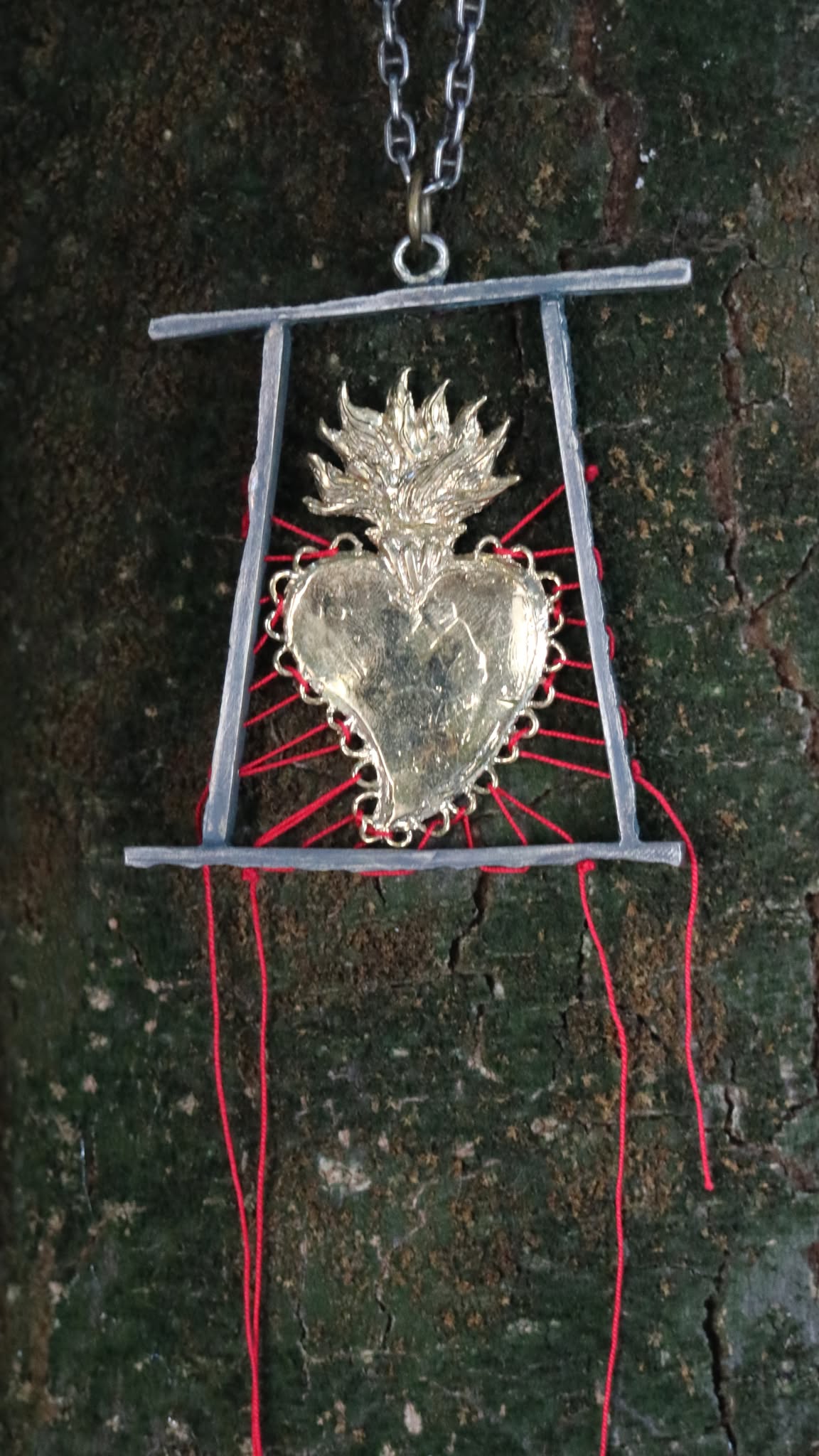
I cannot say whether I “shine” as a designer, but I can say with certainty that having the opportunity to express through my hands what I feel and think lights a fire within me, a flame I cannot, and do not want to, extinguish.
6. „Perdersi per ritrovarsi” (In Losing ourselves we Find ourselves) is your latest jewelry collection. Why should we lose ourselves in order to find the new us?
A question we often ask ourselves is: how can I find my path? It’s a question that often generates anxiety, because we live in a fast-paced society that demands quick and definitive answers. We are afraid to say “I’m lost,” as if getting lost were a failure, rather than a necessary passage.
I’d like to share a quote from the philosopher Maura Gancitano, taken from her 2021 TEDx talk on the theme of getting lost and boredom. In that talk, she recalled the words of Gustave Flaubert, one of the most important French writers of the nineteenth century: to describe a fire or a tree, he said, we must stay in front of that fire or that tree until it appears different from any other.
This means observing without prejudice, without the filter of “this is how it’s done.” For Flaubert, everything, even the most insignificant thing, contains a part of the unknown, and to discover it we must give ourselves time, we must lose ourselves in it.
Today, however, time has become a luxury. We live in a society of performance and speed. To pause, to remain in front of our own “fire” or “tree,” seems absurd. Yet the problem is not outside of us, it lies in our gaze. We become authentic only when we stay with what happens to us long enough to truly see it, to make it unique. There is no right fire or right tree, there is only the experience of staying, of giving ourselves time and the freedom to change direction. We are afraid of getting lost, of stepping off the rigid paths that make us feel safe. But only by getting lost can we rediscover our essence. “Perdersi per Ritrovarsi” (“In Losing ourselves we Find ourselves”) means exactly this: standing before ourselves, exploring our infinite possibilities, accepting boredom and disorientation as fertile spaces, essential to creativity. It’s an invitation to pause, to listen, to play with what we don’t yet know. Because only those who truly get lost can discover their authentic form, their true voice.
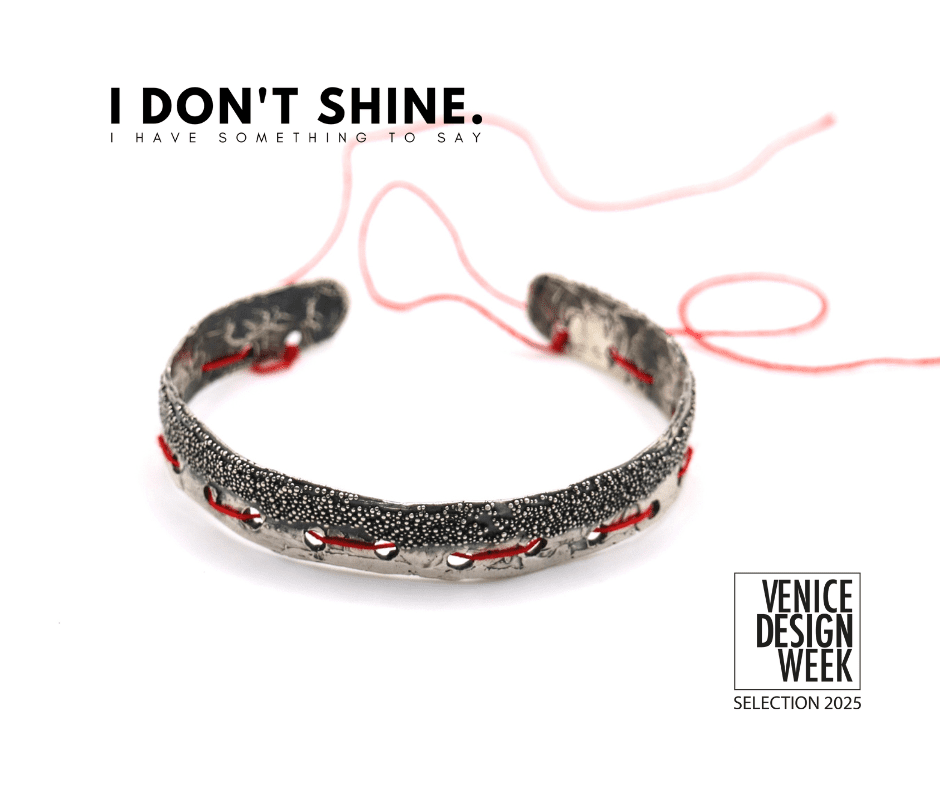
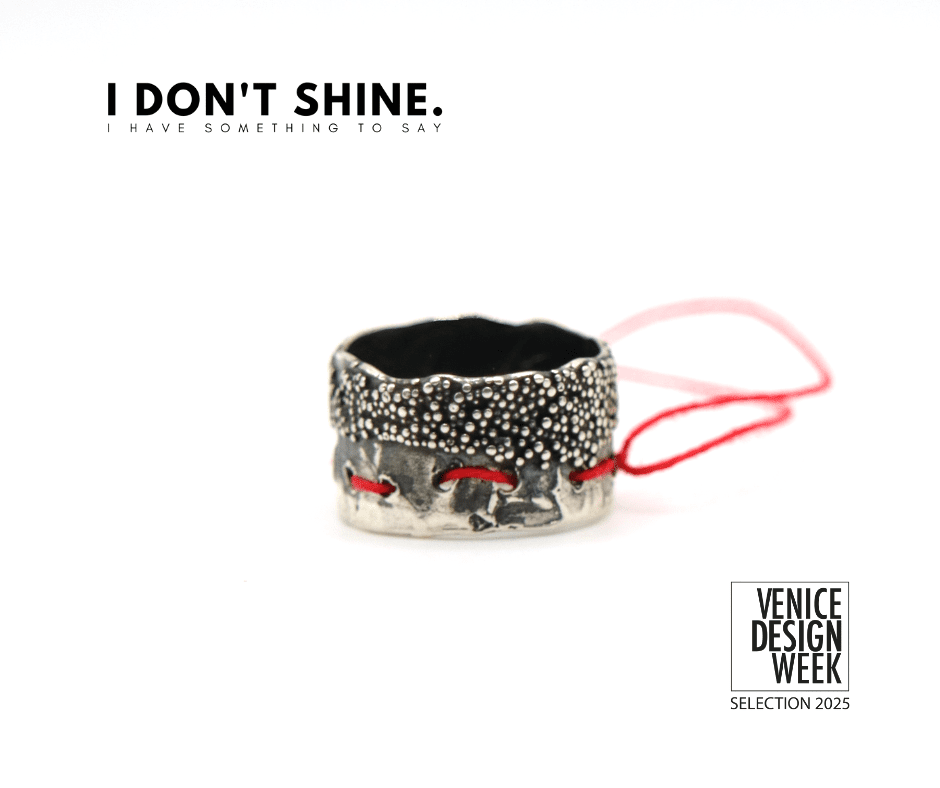
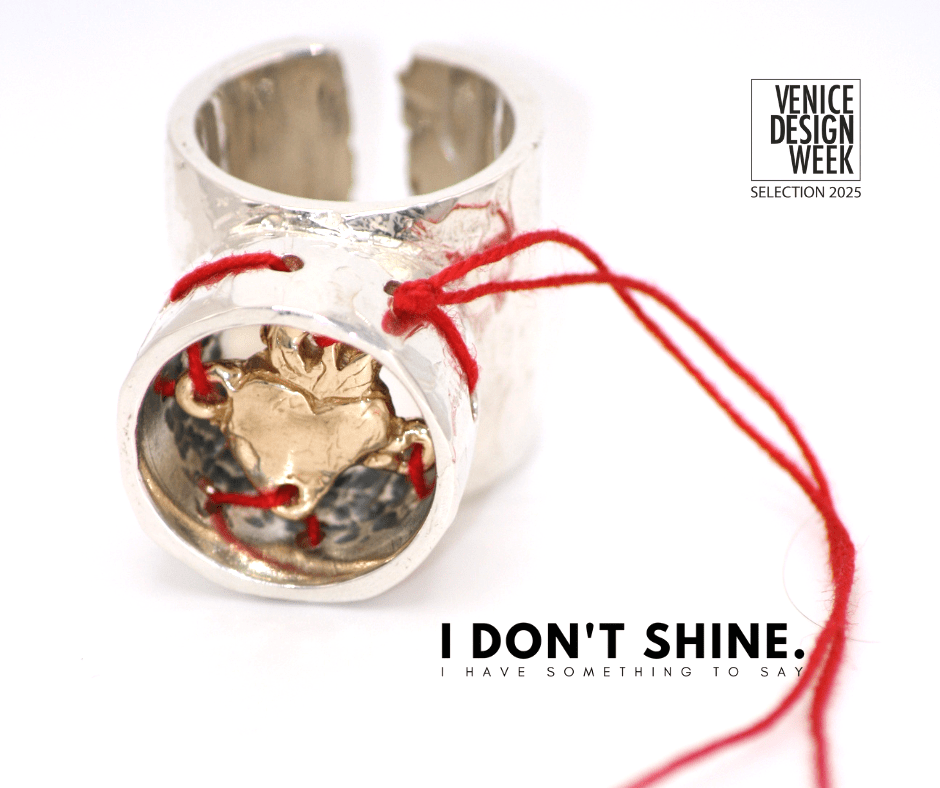
And as Flaubert said, that is how one becomes original. This is what I wanted to express in the “Perdersi per Ritrovarsi” (“In Losing ourselves we Find ourselves”) collection: it represents the journey, or rather, the journeys, I have taken while observing myself, exploring, and learning to truly see who I am. Even the use of fragile materials is part of this process: freed from the idea of “this is not how it’s done,” I was able to look at matter with the same new gaze with which I was beginning to look at myself.
7. How do you see your jewelry in an increasingly digitized society?
I see my jewelry as a living part of contemporaneity. Each piece is born from my own experience, from what I observe and breathe in the time I inhabit, a time that is, inevitably, also digital. I believe the digital world is a new kind of space, an extension of human experience. It is a vast and dynamic place of connection, where ideas, emotions, and forms can travel freely, generating new dialogues.
In this space, we have the chance to reach and connect with far more people, as if through an invisible, endless thread capable of linking us all. Contemporary jewelry, already a language and a reflection on the present, finds in the digital a fertile ground to expand, to be interpreted, and to be lived in ever-evolving ways.
8. Which do you like better, online or offline sales of your products?
I truly value the direct relationship with my customers, looking them in the eyes, listening to their voice as they describe the project they have in mind, sensing the emotion that accompanies their words and their gaze. Those who come to me often do so with a genuine feeling: someone may wish to gift a piece to a person going through a difficult time, another to celebrate a family bond, or simply to offer themselves something that reflects who they are. Behind every commission there is always emotion, a gesture of love in its many forms: for oneself, for others, for life itself.
Online sales, although lacking that physical encounter, are not less meaningful to me. What I mentioned earlier about our digitalized society also applies here: the digital space can be a place of real connection, capable of nurturing trust and authentic exchange, even across distance.
9. What is the most important lesson you learned in your creative career? What were the good parts and the least good parts in your creative career?
Although my journey in the world of contemporary jewelry is still relatively young, I’ve learned that passion, fire, and the need to express oneself are not enough. Structure is equally important. Every piece must meet certain technical requirements to be wearable. Reason and emotion have to move together, and in this sense, my previous experience as a lawyer has helped me cultivate a disciplined, methodical approach, even in the creative process itself.
At the same time, intuition plays a crucial role. As Flaubert once said, you have to allow yourself to get lost, to explore without fear of doing things the “wrong” way. Anni Albers said we must go where no one has never gone before us; I agree, creativity demands experimentation, openness, and the courage to try, fail, and begin again.
On the less positive side, I would say that one of the greatest challenges is the tension between the slow rhythm of artistic creation and the speed of today’s world. We live in a society that measures everything in terms of immediacy and visibility, while art requires time, time to think, to feel, to let ideas mature. Another challenge is helping people understand the real value of artistic work, which goes far beyond the object itself. Behind each jewel there is research, emotion, and a piece of the artist’s inner world.
In the end, I believe authenticity is the key. Dare to express yourselves. Don’t hold back your ideas for fear of not appealing to everyone. Your audience may be smaller, but it will be genuine, and truly in tune with who you are.
10. Do you have designers that you follow or admire?
I admire the respect for material and the use of everyday elements in Anni Albers’ Bauhaus jewelry, the visionary approach of Man Ray, and the sculptural freedom of Alexander Calder.
I’ve always held great esteem for the Padua School, which I see as one of the most remarkable explorations at the crossroads of art and jewellery.
I’m also drawn to the poetic narratives of thread and fabric in Maria Lai’s work, and to the expressive freedom that artists like Philip Sajet and Karl Fritsch bring to contemporary jewelry. Among Italian artists, I have a profound affection for Paola Volpi, my mentor, whose vision and ability to transform materials have had a lasting influence on me. And I was truly touched by Sheila Westera’s slimy pendant, presented in the exhibition I Don’t Shine, I Have Something to Say, a work that speaks with an authentic, honest voice and resonated with me on a very personal level.
11. What do you think is the greatest challenge for a jewelry designer, right now?
I believe the greatest challenge for a jewellery designer today is to remain authentic in a fast-moving world, where everything seems already seen and images flow before our eyes without pause. Finding one’s own voice takes time and the ability to slow down: author’s jewellery is born from a slow thought, from a deep listening to the material, and from a human gesture that resists the logic of rapid production. Another key challenge is to convey the value of the creative process itself, a path made of research, experimentation, mistakes and discoveries, and to redefine the idea of preciousness, shifting it from economic to symbolic and poetic value. I also believe that today’s designer must embrace an ethical responsibility: to create consciously, with respect for the material, the environment, and the people involved. Because contemporary jewellery is not merely an object to wear, but a thought to share, a bridge between art and life.
12. What advice can you give to a jewelry designer that is starting a creative business?
I would tell them to nurture an authentic form of research, without being swayed too much by trends or the market. It’s essential to know oneself deeply, to understand what one wishes to express through a personal language, and to build a coherent identity over time. Technical mastery and knowledge of materials are fundamental, yet equally important are curiosity, freedom, and the courage to experiment, even with alternative or unconventional materials.
I would encourage artists to take part in events and exhibitions such as “I Don’t Shine, I Have Something to Say”, as well as in competitions that truly value contemporary jewelry. These are not only occasions where one’s artistic vision can be appreciated, but also precious moments to meet other creators, share experiences, and grow through dialogue.
13. From your point of view what is trending in the Italian community of jewelry designers?
From my point of view, the Italian contemporary jewelry landscape is vibrant and richly diverse.
Different yet complementary worlds coexist: on one hand, high jewelry, with its enduring tradition of excellence and craftsmanship, exemplified by houses such as Bulgari, and on the other, the refined artistry of goldsmith ateliers like Sant’Eligio, guardians of an ancient savoir-faire.At the same time, the research tradition of the Padua School remains a fundamental reference for those exploring the boundaries between art and jewelry. In recent years, I’ve noticed a growing openness toward more experimental languages. My experience in Venice, for example, was particularly inspiring for the spirit of freedom and encouragement toward experimentation that I found there. Overall, I believe a new awareness is emerging in Italy, one that embraces the art jewel as a conceptual and expressive form, capable of engaging in dialogue with contemporary art and the ideas of our time.
My heartfelt thanks once again to Atelierul Magazine for this important recognition, and to Eleonora Varotto, curator of “I Don’t Shine, I Have Something to Say,” for recognizing my artistic voice and offering me the precious opportunity to exhibit in Venice during the Venice Design Week 2025.

