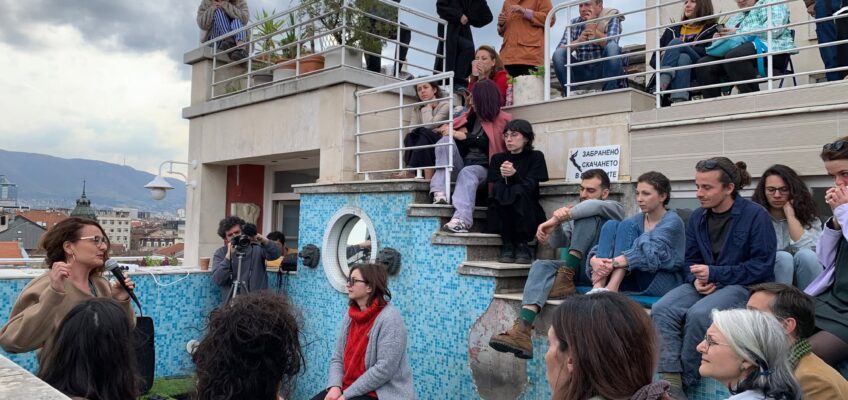
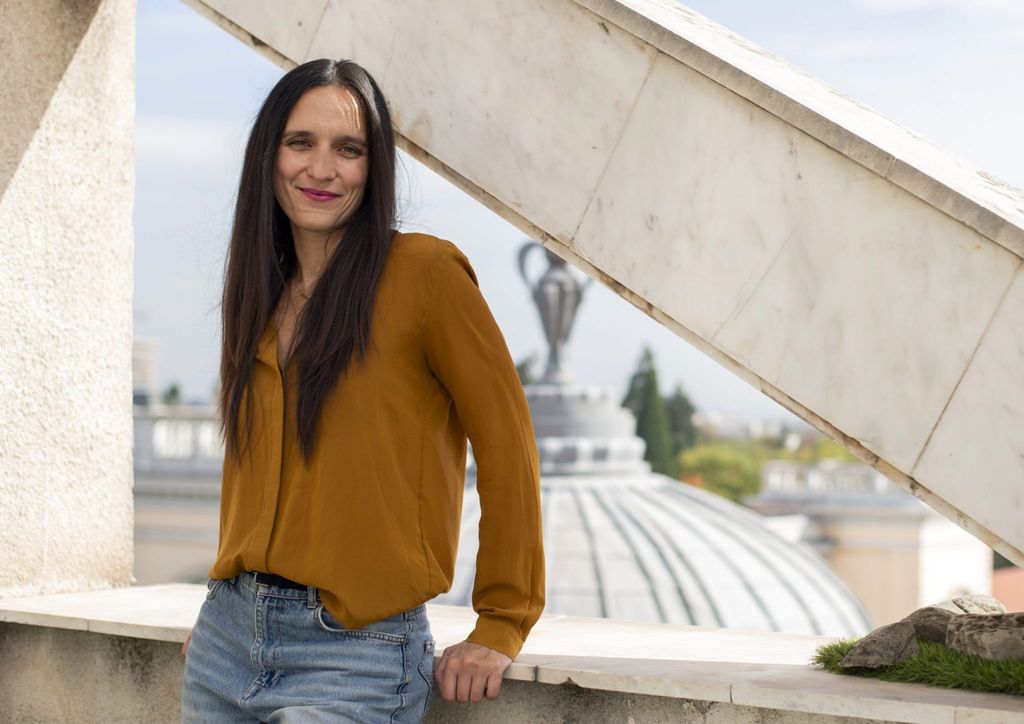
Viktoria Draganova is a curator and writer based in Sofia. In 2015, she established Swimming Pool, an art project space in Sofia, Bulgaria, dedicated to research, collaborative practices, art education, and community politics within the art world. I had the opportunity to meet Viktoria, the Swimming Pool and Nine Elefants festival when I was a speaker at the two-day symposium „Imagining Cities” organized by Viktoria and her team.
1. How did you start the Swimming Pool?
Ten years ago, the art scene in Bulgaria looked very different. In the field of visual arts, there were only a handful of independent spaces, few galleries, and institutions that remained rather conservative. At that time, I was living and working as an independent writer and curator in Frankfurt, constantly traveling back and forth, as well as to art fairs, biennials, and exhibitions – meeting colleagues and friends and experiencing what it meant to be part of the so-called art world where everyone would follow what was happening and had a stance on all hot topics.
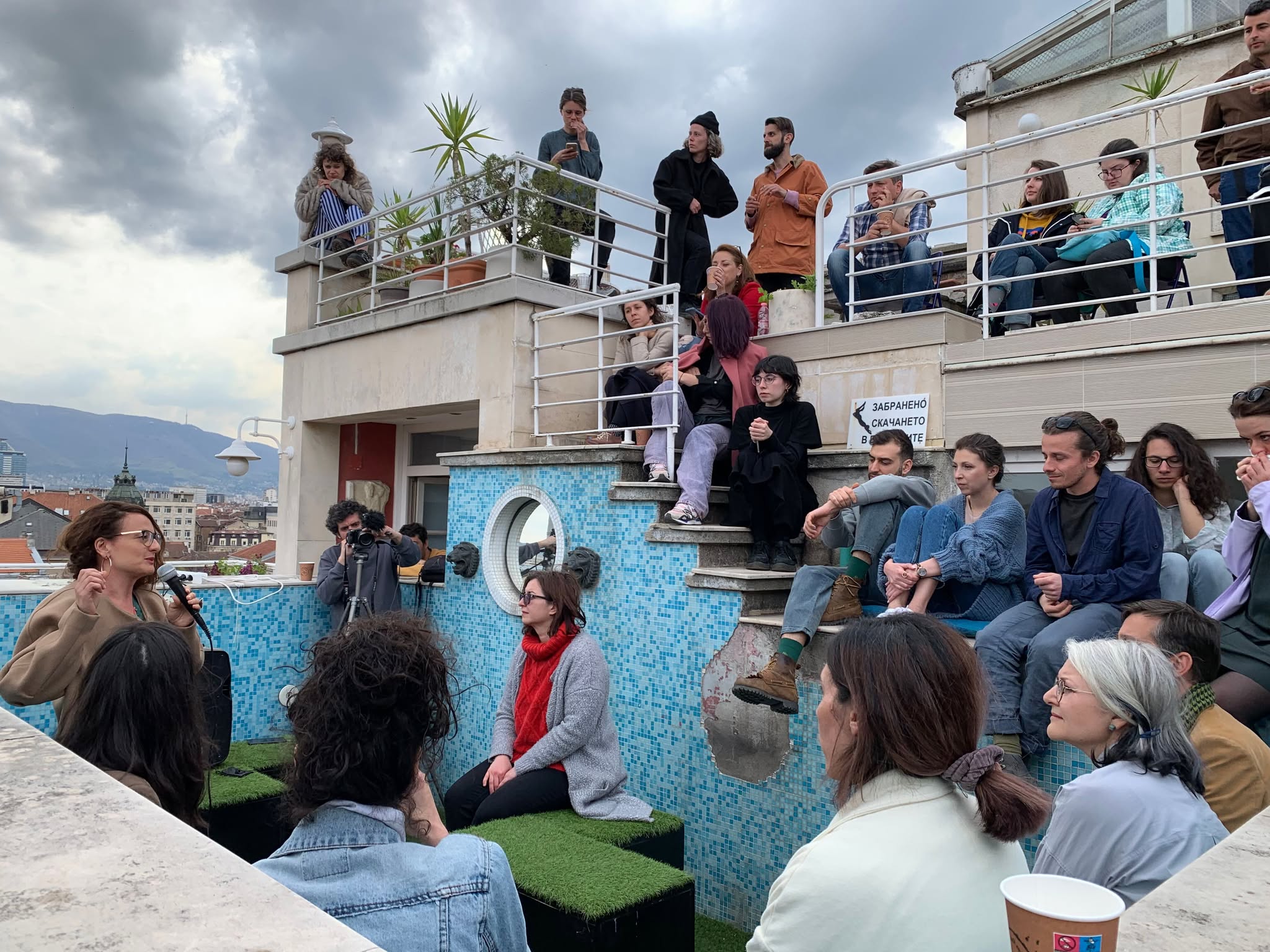
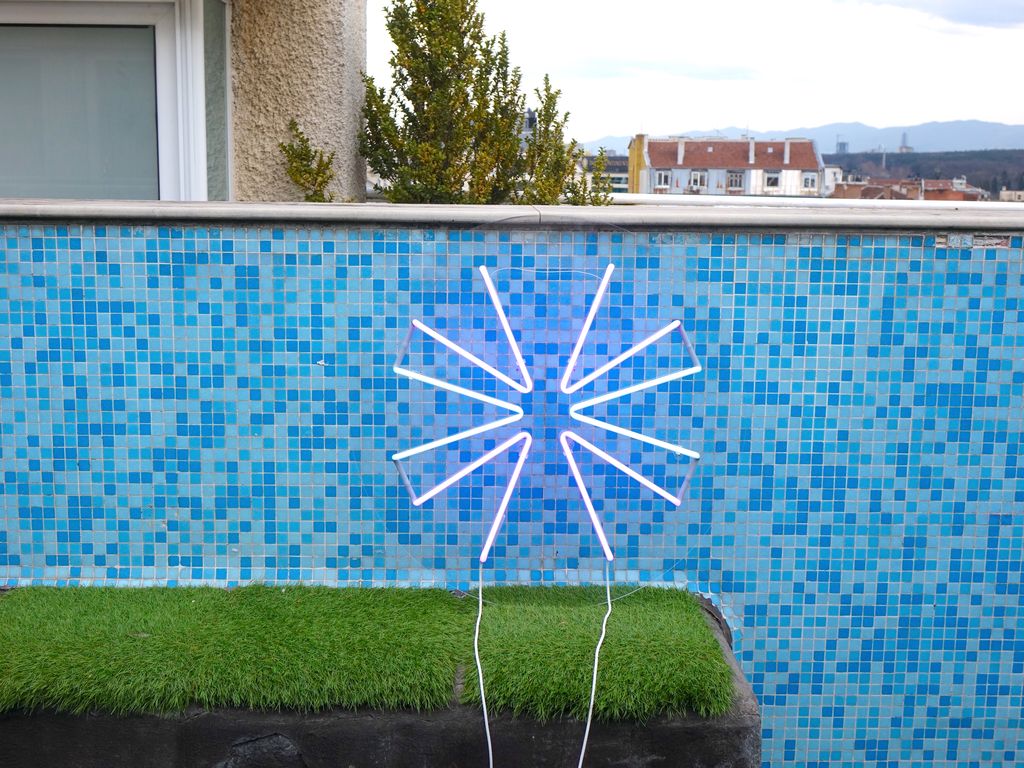
Overall, it felt important to establish a space that would offer a different understanding of exhibition-making and artistic practice. We organized many exhibitions—most of them solo shows—with artists I partly knew from my time in Frankfurt and Berlin, as well as artists who had deeply impressed me in Bulgaria. Among them were Mladen Alexiev, Bianca Baldi, Navine Dossos, Irina Gheorghe, Gery Georgieva, Tiril Hasselknippe, Hanne Lippard, Vera Palme, Martin Penev, and, more recently, Dorota Gaweda & Eagle Kulbokaite, Daria Pougachova, Dessi Terzieva, and Valentina Traianova. I was definitely drawn to art that engages with space, seeks new narrative connections, opens spaces of resilience, relates to fiction, to cultural identities, to movement. We also realized larger projects such as State of Flux (2016, co-curated with Gergana Todorova), and, after COVID, The Possible Institution (2021) and New Ecologies (2023). Here, we experimented with collaboration and transdisciplinary artistic research, while also engaging with central discourses around global flows, de-institutionalization, and the environment.
2. It is described as “a non-profit art project space in Sofia, Bulgaria with focus on artist and curatorial research” …
In the beginning, I imagined research as creating experimental structures for informal art education. Over the years, this took shape in a few unconventional residency formats: for example, students from the Pure Fiction Class at Städelschule spent several days writing in the (empty) pool; Jan Verwoert brought his students from the Piet Zwart Institute for a three-day “speed residency”; and together with artist Andrea Williams, then teaching at the Akademie Mainz, we organized a “Relay” between her students and those from the Bulgarian Art Academy.
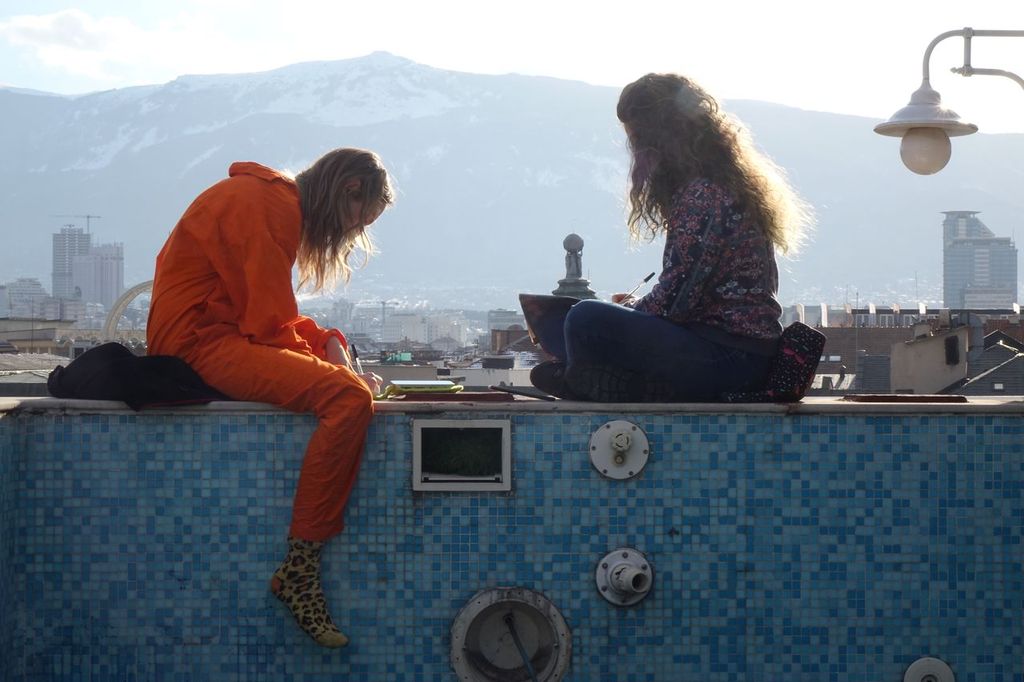
In 2018 and 2019, we organized two informal curatorial schools centered on sharing knowledge and hands-on practice. The final challenge was to create a project anywhere in the city – participants “went” under bridges, in cafés, abandoned shops, and even in a hotel. It was really hard to organize and bring audiences there, but it was really a great experience! Looking back today, I see how these initiatives paved the way for the transdisciplinary platform Center for Social Vision and, since last year, Nine Elephants, a city art festival dedicated to situated practices, research, and decentralization.
3. What was the story of the swimming pool before it became an art space? How has it inspired your practice?
In the early 1940s, my great-grandmother Teodora Peykova, the founder of one of the most interesting women’s magazines after World War I in Bulgaria, commissioned architect Vasil Vasilev to build this building with the idea of having a pool on the roof, to be used by my grandfather, who was studying medicine, for medical purposes. Only a few years later, it was nationalized by the communists who came to power in 1945. Different families lived there, and partly it was used by the State Security services, who set up wiretapping stations. In the 1990s, it was restituted and returned to my family, who generously gave it to me and the art community to use for our activities.
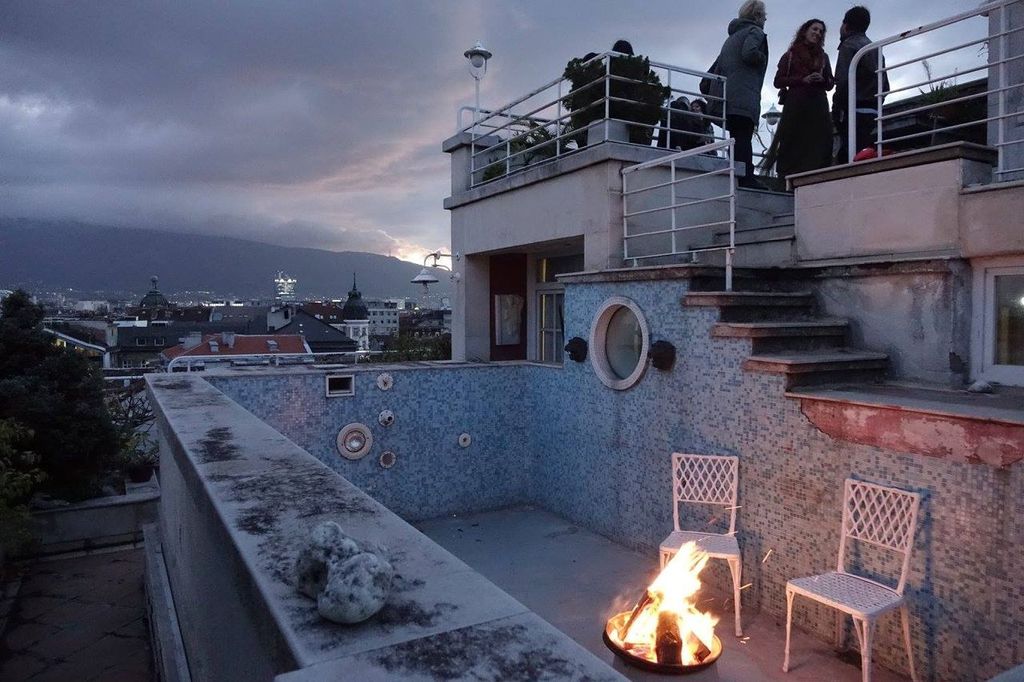
As a curator working primarily through the institution, I saw in this empty space a kind of “blue cube” – the opposite of the white cube – which, precisely because it is empty, is actually full of context, experiences, memories, and possibilities. Over the years I also realized that not only every artistic project, but every conversation, rethinks and reconfigures the space in relation to history, memory, and potential. This allows us to understand it within the context of our shared history – not only of my family, but of us as a community. The space could have become an airbnb, a bar, or a commercial gallery—but then it likely wouldn’t have been able to reshape trajectories of thought and imagination. Still, the sweetest memories remain those when we simply had fun and loved in this space.
4. The Swimming Pool is also, “a space for art, plants, books, love and imagination”, what are you planning next?
This place has never been just a space to drop by and see an exhibition—it’s a place where you arrive with time to spare, and it’s hard to leave. That’s why we decided to emphasize this even more in the future, opening up more opportunities to spend time on the roof, to gather, discuss, and, why not, dream together. Swimming Pool also gave us the impulse not only to look at the city from above, but also to immerse ourselves in it – by creating the Nine Elephants Festival and through our participation in many smaller projects related to complex thinking about the urban environment. Working with artists in this direction will be our main focus in 2026.
5. I had the opportunity to be selected to present at the Imagining Cities conference, how did you start the event? What are the key ideas for the project?
The idea for the informal practice-sharing event, which we titled Imagining Cities, emerged from a desire to open up what we were doing in Sofia to artists, curators, and experts working abroad. Naturally, in the field of situated practices, this is a considerable challenge: how do you work within a specific context and with particular communities while simultaneously developing a methodology that can be translated beyond that context and remain useful to other practitioners?
To me, this seems to be the central challenge for future editions—how we can expand our experience, provide opportunities for artists from elsewhere to get inspired, and create sustainable practices on site. Equally important is identifying the forums in which we can inspire one another and build a shared social and cultural infrastructure for situated, research-based practices.
6. Can you describe what are the most important principles and guidelines that are behind your cultural work?
Be specific. Build (conceptual, physical, imaginary, any) infrastructure others can rely on. Dare to ask big questions. Be kind.
7. Are there any iconic books and articles that guide you through the art world?
I have always found The Octopus in Love by Chus Martinez deeply inspiring, and I discussed its relevance to my practice in my essay “Instituting as a Box, a Forest, a Swimming Pool.” These days, I’m reading Kapka Kassabova and enjoying it immensely. The author ventures into Bulgaria’s Mesta River basin, intertwining knowledge about plants, with folk traditions, history as well as exploring the connection between the land and its inhabitants, the pomaks.
8. Could you tell me more about Nine Elephants, what happened in 2025? Why is the name of the festival Nine Elephants?
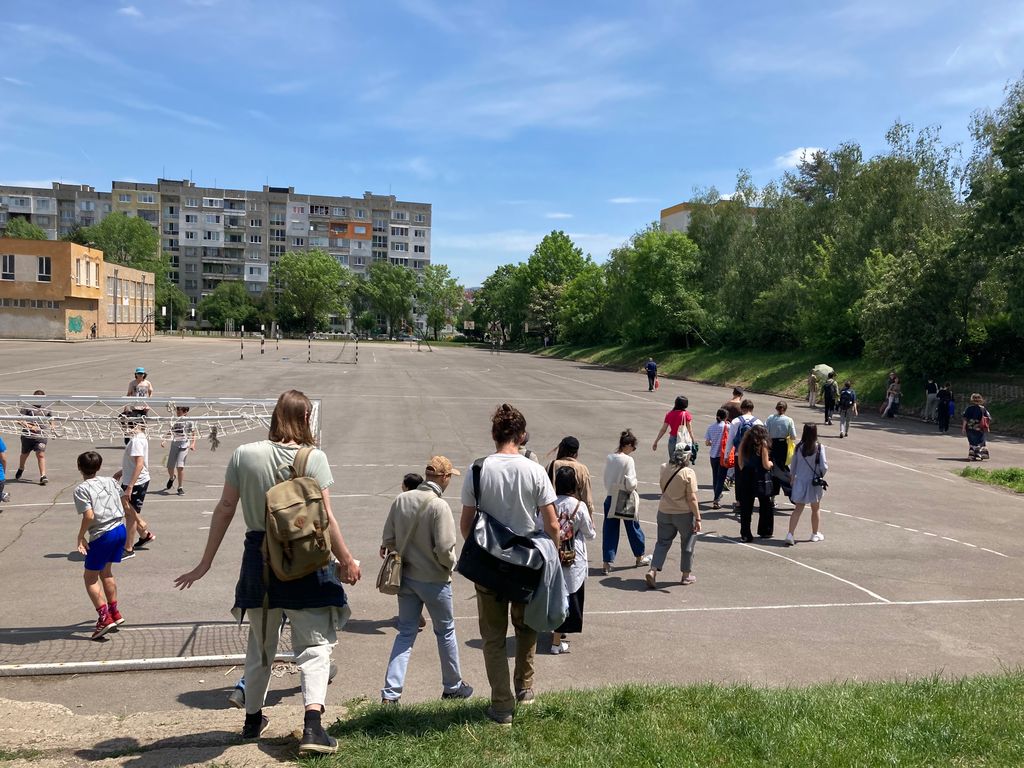
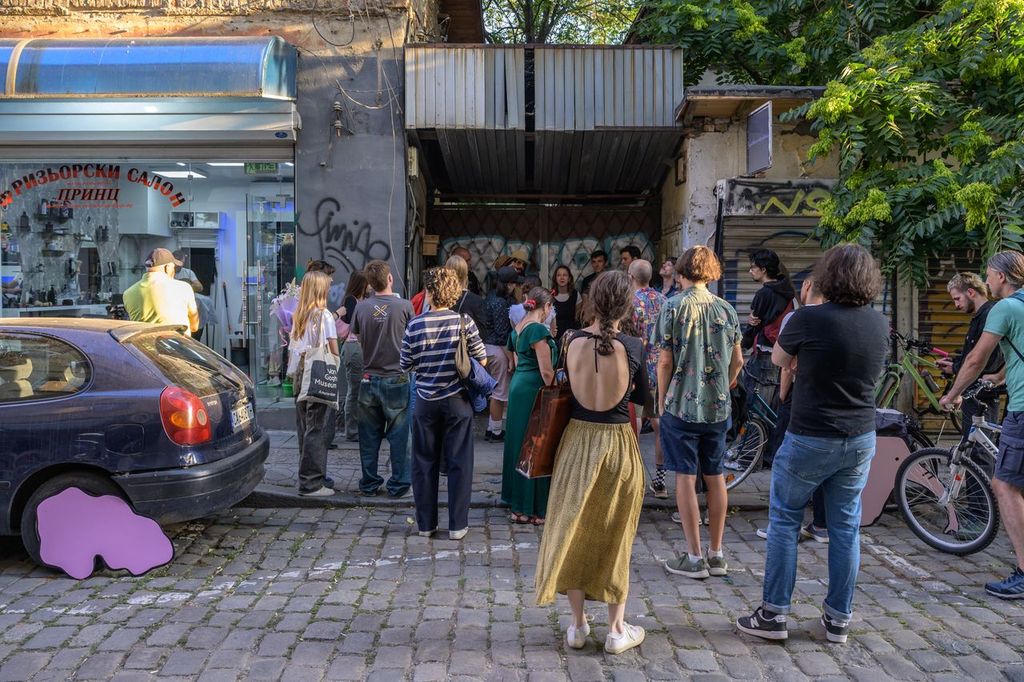
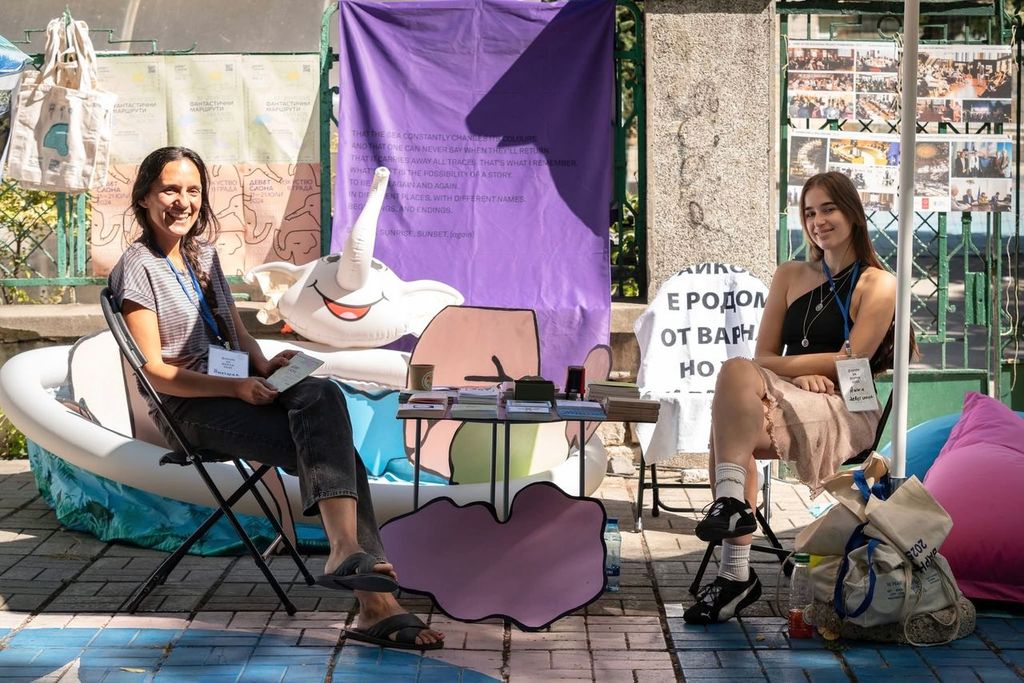
The aim of Nine Elephants as a festival is to encourage artistic, curatorial, and transdisciplinary interventions and research in the urban environment. We imagine art appearing in the street as something fantastical and unbelievable, yet also friendly—open to its surroundings and engaging with people, non-humans, materials, and the stories inhabiting them. Over the past two years, we have learned that what makes this initiative resonate is not spectacle, but the shared informal space it gives to people. So, the festival places focus on micro-actions while relating them to broader social and cultural narratives. In a way, we touched a nerve. With last year’s edition, Fantastic Routes, we invited people to reflect on spontaneous activism, unregulated aid, informal care—everything that creates balance, both in relationships and in the environment we live in. The artists’ projects unfolded in imperfect ways, too – shaped by circumstances, and above all dependent on the help of many people, including the audience, since we often worked on the city’s periphery. In a strange way, it was completed through the engagement of everyone who joined.
9 What do the initiatives respond to?
This approach is informed by the Eastern European context. Under communism, individual agency was absorbed into the collective, and solidarity was imposed from above rather than chosen. After 1989, capitalism and neoliberal individualization emphasized personal responsibility, yet institutions often remained fragile, leaving individuals with limited real agency. The result is a paradox: people take care of their private lives and immediate circles, but civic engagement and collective responsibility are frequently neglected. Nine Elephants responds to this tension by creating spaces where the individual can act, reflect, and intervene in ways that are meaningful both personally and collectively.
Also, it operates within the frame of a fragmented democracy: we can’t rely on a single collective body or a perfectly staged unity, but instead we are participatory, context-sensitive, and non-linear: it values the detours, delays, temporary alliances that emerge organically from interaction with the city and its inhabitants. In this way, the festival contributes not only to artistic practice but to a democratic imagination: one where each contribution, however small, sustains the possibility of a shared world.
10. What comes in 2026?
We have just published our open call and invite you to take a look. For the new edition, we return to the festival’s original impulse to develop and present artistic and interdisciplinary practices in a decentralized way across the city—within neighborhoods, along streets, in parks, and in informal or liminal spaces—mapping new ways of coexistence, perception, and urban storytelling.
Inspired by the mass protests at the end of last year, Nine Elephants 2026 will focus on the city as a living, changing body—ecological, emotional, remembering, and collective. The recent protests revealed a renewed occupation of streets and squares, reclaiming public space as a site of expression, experienced not only politically but also spatially, bodily, and emotionally.
11. Art is work; how can cultural professionals make the statement even bigger?
At least in Bulgaria, independent cultural organizations are not yet sufficiently united or organized into structures—similar to unions—that could negotiate with public bodies for better frameworks and conditions for funding. This is something I hope we will change soon.

